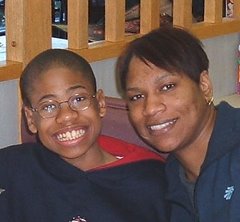
Advocates of the Ridge school in Dutchess County, NY are trying to get Regional approval with the state, which means education programs for our children with autism in their own community.
Please sign and forward The Respect and Justice for Ridge School Petition. Our children and loved ones will benefit from this program. You must live in New York State to sign the petition. Thanks!
Thursday, March 26, 2009
Thursday, March 12, 2009
Survey of Feeding and Digestive Problems in Autistic Children
We were asked to share this information with parents to complete A Survey of Feeding and Digestive Problems in Children with Autistic Spectrum Disorders (ASD): Comparison with non-ASD siblings by Richard Schwartz, MD, pediatrician and professor of pediatrics at Virginia Commonwealth University, Inova Fairfax Hospital for Children, Falls Church, VA.
Below is an introductory letter to parents. Please read it before completing the survey. This is done to fulfill a requirement to explain possible risks, benefits, and confidentiality to all survey participants.
Dear Parent:
The purpose of this survey is to study feeding and digestive problems among children with autistic spectrum disorders (ASD) and their siblings. By filling out this survey, you can help pediatricians and other health professionals learn more about this issue. The results of this study will beused to provide better care and counseling to the parents of autistic children.
Completion of the survey should take approximately 23 minutes.
For your reference, we provide answers to some of the common
questions parents ask about this survey.
What will happen if I take part in this research study?
If you agree to participate in this study, please complete the
attached survey. Your participation in this survey is entirely
voluntary. Once you begin this survey, you may end it or cancel
it at any time.
What risks or benefits can I expect from being in the study?
The only foreseeable risk to you is possible loss of confidentiality.
To minimize this risk, we made this survey anonymous and confidential.
This means that your name will not linked to the completed questionnaire,
and your individual responses will not be published or shared with any
party. For more information, please refer to the next question.
The potential benefit to you is that we can send you a copy of the
research results, if you are interested.
Will my medical information be kept private?
Efforts have been made to protect your identity. No identifying code
has been placed on the survey form nd no one outside of the research
team will have access to the individual completed surveys. Only group
data will be reported and responses will not be person-identifiable.
Efforts have been made to protect your identity. No identifying code
has been placed on the survey form and no one outside of the research
team will have acce Efforts have been made to protect your identity.
No identifying code has been placed on the survey form and no one outside
of the research team will have access to the individual completed surveys.
What other choices do I have if I do not take part in this study?
Taking part in this research study is voluntary. If you choose not to
participate, there will be no penalty or loss of benefits to which you
are otherwise entitled.
Who can answer my questions about the study?
If you have any questions regarding this research study, please
contact Vahe Badalyan, MD, at vbadalyan@aol.com.
Thank you for participating in this survey.
If you have any questions or concerns, please do not hesitate to
contact me at vbadalyan@aol.com.
Thank you for your time.


Thursday, March 05, 2009
Some Behavior Problems May Be Reduced By Supportive Co-Parenting
Article Date: 04 Mar 2009
Researchers looked at changes in children's level of aggressive behavior and other forms of "acting out" as they went from 4 years old to 5 years old. The study found that supportive co-parenting helped children who have difficulty regulating their behavior and attention levels - what researchers call effortful control. Results showed children who had low levels of effortful control generally showed increases in negative behaviors over the year - unless their parents had a supportive co-parenting relationship.
"If you support your spouse in front of your child, show that you are a united front, it can help prevent some behavior problems in children who may be at risk," said Sarah Schoppe-Sullivan, lead author of the study.
"If you have a child who has trouble controlling his or her behavior, that's not a problem that often goes away," she said. "That's one reason why it is so significant that positive co-parenting can help manage the problem."
Read full article at: http://www.medicalnewstoday.com/articles/141093.php
For practical ways to help, plan and manage autism visit: Child-Autism-Parent-Cafe.Com.
Friday, February 06, 2009
NYS Proposal to Cut SSI Benefits
(E-mail excerpt from Autism Speaks)
Although there has been no increase in the state supplement
for 20 years, this year the New York Executive Budget is proposing
to cut the state supplement to Social Security Insurance (SSI) payments
for New Yorkers who are aged, blind or have a disability, such as autism.
The proposed legislation would cut benefits by over 25% for individuals
and couples living alone in the community and 45-70% for those living
with other and are scheduled to occur in June 2009. Now more than
ever we need to preserve the safety net for those with autism who
are SSI beneficiaries.
How You Can Help:
1. Contact Governor David Paterson and your state representatives today!
Tell them that individuals with autism depend on this income to provide for
their most basic needs, including housing and food. These proposed cuts will
result in more people with autism being forced into costly institutional
settings because they can't get the support they need to remain in their own
homes.
Governor David Paterson - (518) 474-8390
2. Forward this e-mail to everyone you know and ask them to take action too.
To learn more about Autism Votes, an initiative of Autism Speaks focused on
federal and state legislative advocacy, please visit http://www.autismvotes.org/.
Novel Cartoon Aid Helps Children Recognize Emotions
A new study to be published in the Journal of Autism and Developmental
Disorders from Cambridge University has found that after watching The Transporters DVD for just 15 minutes a day for four weeks, most children with autism caught up with other children in their ability to recognize emotions. Parents who have used the DVD have reported noticeable improvements and stronger emotional bonds with their children. Professionals have noted children commenting on other people’s feelings, often for the first time.
For more information go to www.thetransporters.com
Parents United Learning the Special Education System
PULSES
Parents United Learning the Special Education System
The Ridge School, a private school for high functioning Asperger's students in
Hyde Park, has been denied state approval to serve students with disabilities.
According to the NYS Department of Education, a private school serving
Asperger's students in Dutchess County is not needed at this time.
Come To The: Ridge School Rally
Saturday, February 14th, 1 Pm
Goshen Inn, 40 Park Place, Goshen
Support this school in their quest to become an approved special education
school.
For more information contact:
Kathy Silgailis (845) 987-8054 or silgailisk@wpunj.edu
child-autism-parent-cafe.com
Wednesday, January 07, 2009
Autism Toll-Free Resource Line
The Autism Research Institute is offering information and contacts through its new toll-free resource line at (866) 366-3361, under the leadership of Unlocking Autism.
child-autism-parent-cafe.com
child-autism-parent-cafe.com
Saturday, November 22, 2008
Illinois passes autism bill
Gov. Rod Blagojevich (IL) is expected to sign legislation passed this week requiring insurers to provide up to $36,000 in coverage annually for the diagnosis and treatment of autism until the patient turns 21. The coverage mandate applies only to fully insured individual and group policies and will not apply to self-insured benefit plans. At least 4,500 Illinois families are expected to qualify for the expanded coverage. child-autism-parent-cafe.com
Read full article
Read full article
Friday, November 07, 2008
Childhood Language Disorder Linked to Autism Gene
Simon Fisher, University of Oxford geneticist and researcher led the study explaining why some children develop language difficulties. The condition known as specific language impairment affects 2-7 percent of pre-school children and is as common as dyslexia. Tests on children from 184 families showed children who carried certain changes in the gene CNTNAP2 had reduced language abilities characteristic of the common disorder. An earlier study had shown that the same gene hinders language ability in autistic children. Researchers do not know exactly how changes to the gene interfere with language development. One possibility may be that changes in CNTNAP2 somehow interferes with production of a type of protein called a neurexin important to the fetal development of the nervous system and eventual language ability. child-autism-parent-cafe.com
Click here to read full article
Click here to read full article
Monday, October 13, 2008
NY - Transition Fair 2008
Transition Fair for Students with Developmental Disabilities
Saturday, November 15, 2008
10 a.m. - 3 p.m.
Location: Westchester County Center, 198 Central Avenue, White Plains, New York
(Just off the Bronx River Parkway in White Plains, NY)
For more information call (914) 995-5244
Saturday, November 15, 2008
10 a.m. - 3 p.m.
Location: Westchester County Center, 198 Central Avenue, White Plains, New York
(Just off the Bronx River Parkway in White Plains, NY)
For more information call (914) 995-5244
Thursday, October 02, 2008
Older Fathers Linked to Autism in Children
The British Journal of Psychiatry reports that researchers in Japan have found older fathers are twice as likely to have autistic children as younger men while the mother's age has no influence on the likelihood of her offspring developing the disorder.
An analysis of 84 kids with high-functioning autism spectrum disorders and 208 children without the disorder found that fathers over 33 years were 1.8 times more likely to have children with autism than fathers under 29 years. Men who fathered children between the age of 29 and 32 years were 30 per cent more likely to have an autistic child, the study found.
Read full article
Tuesday, September 23, 2008
First Autism Summit - Cleveland, OH Oct. 10th – 12th
Autismtoday.com and Rainbow Babies & Children`s Hospital are co-hosts of the first annual international autism summit of 2008. Parent advocates, doctors, educators address the latest issues on Autism and Asperger’s Syndrome. Extraordinary speakers and workshop leaders get your questions answered. Network and share experiences with others. New national and local Autism and Asperger’s resources.
child-autism-parent-cafe.com
child-autism-parent-cafe.com
Tuesday, September 09, 2008
Studies Find Increase In Suicides Among Black Youths
Atlanta, GA (BlackNews.com) - Not long ago, the words "suicide" and "African Americans" were almost never mentioned in the same breath. Despite confronting challenges from slavery to Jim Crow to structural racism, blacks rarely took their own lives. It was a positive health disparity. Until now.
There is alarming evidence that the suicide rate for young African-American men is escalating, and just as much evidence that America's health-care system is ill-equipped to curb it.
Dr. Claire Xanthos, a health services research specialist, recently wrote a policy paper citing studies showing that from 1980 to 1995, the suicide rate for black adolescents rose from 5.6 to per 100,000 of the population. Put in starker terms: this doubling of the suicide rate for young black males has made it the third-leading cause of death among that demographic group.
Clearly, it is a complex problem that is directly related to life experiences of young African-American males in America. While the suicide rate for young black men has risen, the suicide rate for black women remains among the lowest of any demographic group.
So why are our young black men killing themselves?
Dr. Xanthos concludes there are many factors, and among them are the race-related challenges that these youths face. The data show that they go to jail, drop out of school and become victims of crime at rates far higher than their white counterparts. Moreover, young black males are more likely than not to live in a family environment that is less than ideal; roughly 70 percent of African Americans live in single-parent homes.
The combination of family stress, violence in their communities, and the stigma and discrimination they face is taking a toll on young black males. Some mental health specialists, such as Dr. Alvin Poussaint, argue that "death by cop" incidents should be counted as suicide. These are occasions when black youths are despondent and won't commit suicide, but purposely break the law so someone else will kill them.
"How many young men who put themselves in situations where it's very likely that they're going to get shot to death are actually committing suicide?" asked Dr. Poussaint in a recent interview on National Public Radio. "There is such a thing as what we call victim-precipitated homicide, which is suicide. The most classic example would be suicide by cop, which you read about in the newspaper from time to time, where people wanted to be shot to be killed because they were suicidal, but they didn't want to do it themselves...because there's still a stigma attached to committing suicide, so they'd rather have someone else kill them or have it seem like an accident."
This rising suicide tide can impact middle-class black teenagers in white suburbs, as well as those in inner-city neighborhoods. In fact, Dr. Xanthos argues that black youths living in white communities often face the trauma of not relating to their white neighbors and also feeling estranged from blacks from poorer, urban settings. Certainly, the death of James Dungy, the 18-year-old son of Indianapolis Colts coach Tony Dungy, underscored that suicide can strike the rich and poor.
What's clear is that black communities, healthcare professionals and public health officials must mobilize to meet the challenges presented by this problem.
The stigma towards mental illness in the black communities is so taboo that obvious signs that someone has a problem are frequently ignored, even by close family members and friends. The first step must come from parents and friends recognizing the behavior patterns that indicate someone has a problem, and then working to get help for that person.
There is also a crucial role to be played by public health programs, such as Medicaid, which must make it easier for young black men to receive counseling and treatments.
But once these teens get to treatment facilities another problem develops: the lack of black therapists, counselors and psychiatrists. According to data, blacks are about four percent of the nation's psychiatrists, three percent of the psychologists and seven percent of social workers. It's imperative that more African Americans be trained for those positions. The problems weighing on many black youths are created by racism and the family, educational and urban tensions that they face in everyday life. In these instances, an African-American counselor or physician who may be more likely to grasp the situation is needed to provide assistance.
Dr. Xanthos also raises the need for more "bicultural'' training for young black males. Or put another way, it is learning to survive in a white society. Such training would better prepare black youths for integration into schools and workplaces that are predominantly white, while also preparing black youths to confront and overcome the discrimination they are likely to face in American society.
This problem can no longer be ignored. It must be faced in our homes, our communities and by public officials in schools and health facilities.
The reality is that young black males face some of the biggest hurdles in our society, and if they are going succeed we all must do a better job of identifying people with problems and facilitating the treatment that can put them on a successful path.
(Dr. Henrie M. Treadwell, associate director of Development at the National Center for Primary Care of Morehouse School of Medicine, is also director of Community Voices, a non-profit working to improve health services, and health-care access, for all Americans. For print or broadcast interviews with Dr. Treadwell, please contact Alicia Ingram, 404-493-1724, ingramalicia@bellsouth.net.)
-END-
Monday, August 25, 2008
Autism statistics alarm Somalis in Minnesota
An unusual number of Somali children turning up in autism programs in Minneapolis has captured the attention of state and federal health officials, as fears about a possible surge in autism have swept Minnesota's Somali community. Last year, Somali children made up under 6 percent of the school population, but 17 percent of those in early childhood autism programs (14 of 81 children). The numbers have been creeping up for several years, especially among young children. Somali children appear to have a more severe form of the condition. A developmental pediatrician and autism specialist at Children's Hospital estimates that 10 percent of his patients are Somali. "I do think there's something up with this," McLellan said. "I don't know what it is."
Swedish researchers reported this summer that Somali children in Stockholm appeared to have three to four times the rate of autism as other children -- though the study was based on only 17 children. Another Swedish study found high autism rates among African immigrants from Uganda.
child-autism-parent-cafe.com
Click here to read article
Sunday, August 03, 2008
NYS Governor Paterson Signed Bill to Update Standards and Guidelines Used to Identify Kids with ASDs
Governor David A. Paterson signed a bill (A.9512-A/S6527-B) this week that will require the Department of Health (DOH) to update the guidelines used by pediatricians to identify children with Autism Spectrum Disorders (ASDs) and refer them for appropriate services.
The bill requires DOH to establish best practice protocols for early screening of children for ASDs by pediatric primary care providers. These protocols would incorporate standards and guidelines established by the American Academy of Pediatrics and must include: (1) the routine employment of objective ASD screening tools at regular intervals during critical childhood developmental stages; (2) facilitation of a dialogue between service provider and parents for purposes of educating the parents about ASDs, using a modified checklist for ASDs in toddlers; and (3) an appropriate referral mechanism for children who, based upon results of the screening process, require further evaluation. The bill also requires DOH to make the modified checklist for ASD available to the public on its website. child-autism-parent-cafe.com
Read full Press Release here
Monday, July 21, 2008
News Segment on Radio Talk Host Negative Autism Comments
From NAA:
Radio talk show host Michael Savage, made disparaging comments on autism, and drew outrage from the media and advocates for families affected by autism. Sabeeha Rehman, Pres. of NAA New York Metro, was interviewed by WPIX CW11 and asked to explain autism, and her reaction to the comments. Segments of the interview were aired on the news Friday, July 18. child-autism-parent-cafe.com
Watch the video clipping of the news segment and the interview here
From: New York State Advocacy Central for Autism
Mike Savage probably thinks the shock value of what he said will enhance his place in the lore of conservative talk radio. He probably figures he will make more money as a result of his comments. We should not let him become even more wealthy by stepping on the hearts of our disabled children.
We can hit him, his advertisers and investors in the pocketbook, the only place he seems to understand or care about.
Click here to take action now!
Send the link to family and friends. You will have a great impact at disciplining or removing this guy from the airwaves. The email we set up will go to his superiors, the investors who run the stations he is on, and our many important politicians. Just go to the site, send the memo, and please tell your friends.
Wednesday, July 09, 2008
Who pays for autism treatment?
An explosion in the number of children diagnosed has parents,
insurers and state and private institutions battling over coverage.
The case of Andrew Arce is a window into the conflict.
By Lisa Girion
Los Angeles Times Staff Writer
July 6 2008
By the time Andrew Arce was 15 months old,
his parents suspected he was autistic.
View complete article
To learn practical ways to help, plan and manage daily living with autism visit: www.child-autism-parent-cafe.com.
The law firm below represents families that have been denied care from insurance companies or assistance in obtaining treatment for autism from insurance companies for their kids with an Autism Spectrum Disorder.
Law Offices of Scott C. Glovsky
225 S. Lake Ave., Suite 1000
Pasadena, CA 91101
Toll Free: (877) 316-2093
Thursday, July 03, 2008
NY: All New Vaccine Mandates Squashed
Parents are Powerful
From A-CHAMP:
New York Assembly Bill A 10942, the "worst vaccine bill ever" and the mandatory meningococcal vaccine bill are dead. And they were killed by parents who aren't going to let pharma kick them around anymore.
Another vaccine bill that would have allowed minors to get vaccines for sexually-transmitted diseases without parents permission or knowledge went down to defeat when the Assembly Health committee refused to even consider it.
This represents the fourth defeat in a row, with no wins, for the vaccine industry in New York, last year an mandatory HPV bill was killed.
Read full article
Wednesday, June 18, 2008
New York Metro Chapter of the National Autism Association
From NAA... If you have been coming to the NYC meetings, but have not joined, please take a moment to go here: http://www.nationalautismassociation.org/join.php and join through the national website.
Reasons to join the NAA!
- Supports treatments that help our children, including biomedical treatments
- Provides outreach and support for families who have just been diagnosed
- Offers member discounts from certain companies that provide supplements for autistic children http://www.nationalautismassociation.org/join.php.
- Supports relevant autism research, including a current study exploring the link between mercury and autism: http://www.nationalautismassociation.org/researchmercury.php.
- Distributes email updates on relevant legislative activity
- Connects you to a large network of families and practitioners in the autism community
When you join NAA, you automatically become a member of the New York Metro Chapter. You will benefit from the local monthly educational sessions geared towards families, educators and caregivers affected by Autism and receive help from our NAAvigators who will help families navigate the system.
For autism information and practical strategies visit: child-autism-parent-cafe.com.
Friday, June 13, 2008
GAO Report on Federal Disability Programs
From Margaret Dunkle, Director, Early Identification and Intervention Collaborative for Los Angeles County and Senior Fellow, Center for Health Services Research & Policy, George Washington University
The Government Accountability Office May 20th report on Federal Disability Programs: More Strategic Coordination Could Help Overcome Challenges to Needed Transformation has a lot going for it. But it’s not the first place one would normally look to find a jazzy report with tough recommendations. GAO recommends that Congress create a new coordinating entity to make more than 200 federal programs in 20 agencies dealing with disabilities fit together for real people. Noting these programs typically have different missions, goals, funding streams and eligibility criteria. And it is generally left to the people with disabilities and their families to figure out how to navigate the confusing maze of services, supports and benefits.
Interestingly, by focusing primarily on adults with disabilities and pretty much ignoring children with disabilities, this report actually underestimates the extent of fragmentation and confusion. You can find the full GAO report at: http://www.gao.gov/new.items/d08635.pdf. child-autism-parent-cafe.com
Subscribe to:
Posts (Atom)