Article Date: 04 Mar 2009
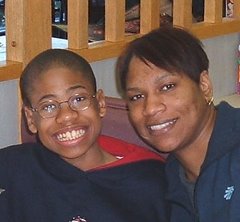
Researchers looked at changes in children's level of aggressive behavior and other forms of "acting out" as they went from 4 years old to 5 years old. The study found that supportive co-parenting helped children who have difficulty regulating their behavior and attention levels - what researchers call effortful control. Results showed children who had low levels of effortful control generally showed increases in negative behaviors over the year - unless their parents had a supportive co-parenting relationship.
"If you support your spouse in front of your child, show that you are a united front, it can help prevent some behavior problems in children who may be at risk," said Sarah Schoppe-Sullivan, lead author of the study.
"If you have a child who has trouble controlling his or her behavior, that's not a problem that often goes away," she said. "That's one reason why it is so significant that positive co-parenting can help manage the problem."
Read full article at: http://www.medicalnewstoday.com/articles/141093.php
For practical ways to help, plan and manage autism visit: Child-Autism-Parent-Cafe.Com.
Showing posts with label Study. Show all posts
Showing posts with label Study. Show all posts
Thursday, March 05, 2009
Friday, February 06, 2009
Novel Cartoon Aid Helps Children Recognize Emotions
A new study to be published in the Journal of Autism and Developmental
Disorders from Cambridge University has found that after watching The Transporters DVD for just 15 minutes a day for four weeks, most children with autism caught up with other children in their ability to recognize emotions. Parents who have used the DVD have reported noticeable improvements and stronger emotional bonds with their children. Professionals have noted children commenting on other people’s feelings, often for the first time.
For more information go to www.thetransporters.com
Disorders from Cambridge University has found that after watching The Transporters DVD for just 15 minutes a day for four weeks, most children with autism caught up with other children in their ability to recognize emotions. Parents who have used the DVD have reported noticeable improvements and stronger emotional bonds with their children. Professionals have noted children commenting on other people’s feelings, often for the first time.
For more information go to www.thetransporters.com


Friday, November 07, 2008
Childhood Language Disorder Linked to Autism Gene
Simon Fisher, University of Oxford geneticist and researcher led the study explaining why some children develop language difficulties. The condition known as specific language impairment affects 2-7 percent of pre-school children and is as common as dyslexia. Tests on children from 184 families showed children who carried certain changes in the gene CNTNAP2 had reduced language abilities characteristic of the common disorder. An earlier study had shown that the same gene hinders language ability in autistic children. Researchers do not know exactly how changes to the gene interfere with language development. One possibility may be that changes in CNTNAP2 somehow interferes with production of a type of protein called a neurexin important to the fetal development of the nervous system and eventual language ability. child-autism-parent-cafe.com
Click here to read full article
Click here to read full article
Thursday, October 02, 2008
Older Fathers Linked to Autism in Children
The British Journal of Psychiatry reports that researchers in Japan have found older fathers are twice as likely to have autistic children as younger men while the mother's age has no influence on the likelihood of her offspring developing the disorder.
An analysis of 84 kids with high-functioning autism spectrum disorders and 208 children without the disorder found that fathers over 33 years were 1.8 times more likely to have children with autism than fathers under 29 years. Men who fathered children between the age of 29 and 32 years were 30 per cent more likely to have an autistic child, the study found.
Read full article
An analysis of 84 kids with high-functioning autism spectrum disorders and 208 children without the disorder found that fathers over 33 years were 1.8 times more likely to have children with autism than fathers under 29 years. Men who fathered children between the age of 29 and 32 years were 30 per cent more likely to have an autistic child, the study found.
Read full article
Tuesday, September 09, 2008
Studies Find Increase In Suicides Among Black Youths
Atlanta, GA (BlackNews.com) - Not long ago, the words "suicide" and "African Americans" were almost never mentioned in the same breath. Despite confronting challenges from slavery to Jim Crow to structural racism, blacks rarely took their own lives. It was a positive health disparity. Until now.
There is alarming evidence that the suicide rate for young African-American men is escalating, and just as much evidence that America's health-care system is ill-equipped to curb it.
Dr. Claire Xanthos, a health services research specialist, recently wrote a policy paper citing studies showing that from 1980 to 1995, the suicide rate for black adolescents rose from 5.6 to per 100,000 of the population. Put in starker terms: this doubling of the suicide rate for young black males has made it the third-leading cause of death among that demographic group.
Clearly, it is a complex problem that is directly related to life experiences of young African-American males in America. While the suicide rate for young black men has risen, the suicide rate for black women remains among the lowest of any demographic group.
So why are our young black men killing themselves?
Dr. Xanthos concludes there are many factors, and among them are the race-related challenges that these youths face. The data show that they go to jail, drop out of school and become victims of crime at rates far higher than their white counterparts. Moreover, young black males are more likely than not to live in a family environment that is less than ideal; roughly 70 percent of African Americans live in single-parent homes.
The combination of family stress, violence in their communities, and the stigma and discrimination they face is taking a toll on young black males. Some mental health specialists, such as Dr. Alvin Poussaint, argue that "death by cop" incidents should be counted as suicide. These are occasions when black youths are despondent and won't commit suicide, but purposely break the law so someone else will kill them.
"How many young men who put themselves in situations where it's very likely that they're going to get shot to death are actually committing suicide?" asked Dr. Poussaint in a recent interview on National Public Radio. "There is such a thing as what we call victim-precipitated homicide, which is suicide. The most classic example would be suicide by cop, which you read about in the newspaper from time to time, where people wanted to be shot to be killed because they were suicidal, but they didn't want to do it themselves...because there's still a stigma attached to committing suicide, so they'd rather have someone else kill them or have it seem like an accident."
This rising suicide tide can impact middle-class black teenagers in white suburbs, as well as those in inner-city neighborhoods. In fact, Dr. Xanthos argues that black youths living in white communities often face the trauma of not relating to their white neighbors and also feeling estranged from blacks from poorer, urban settings. Certainly, the death of James Dungy, the 18-year-old son of Indianapolis Colts coach Tony Dungy, underscored that suicide can strike the rich and poor.
What's clear is that black communities, healthcare professionals and public health officials must mobilize to meet the challenges presented by this problem.
The stigma towards mental illness in the black communities is so taboo that obvious signs that someone has a problem are frequently ignored, even by close family members and friends. The first step must come from parents and friends recognizing the behavior patterns that indicate someone has a problem, and then working to get help for that person.
There is also a crucial role to be played by public health programs, such as Medicaid, which must make it easier for young black men to receive counseling and treatments.
But once these teens get to treatment facilities another problem develops: the lack of black therapists, counselors and psychiatrists. According to data, blacks are about four percent of the nation's psychiatrists, three percent of the psychologists and seven percent of social workers. It's imperative that more African Americans be trained for those positions. The problems weighing on many black youths are created by racism and the family, educational and urban tensions that they face in everyday life. In these instances, an African-American counselor or physician who may be more likely to grasp the situation is needed to provide assistance.
Dr. Xanthos also raises the need for more "bicultural'' training for young black males. Or put another way, it is learning to survive in a white society. Such training would better prepare black youths for integration into schools and workplaces that are predominantly white, while also preparing black youths to confront and overcome the discrimination they are likely to face in American society.
This problem can no longer be ignored. It must be faced in our homes, our communities and by public officials in schools and health facilities.
The reality is that young black males face some of the biggest hurdles in our society, and if they are going succeed we all must do a better job of identifying people with problems and facilitating the treatment that can put them on a successful path.
(Dr. Henrie M. Treadwell, associate director of Development at the National Center for Primary Care of Morehouse School of Medicine, is also director of Community Voices, a non-profit working to improve health services, and health-care access, for all Americans. For print or broadcast interviews with Dr. Treadwell, please contact Alicia Ingram, 404-493-1724, ingramalicia@bellsouth.net.)
-END-
There is alarming evidence that the suicide rate for young African-American men is escalating, and just as much evidence that America's health-care system is ill-equipped to curb it.
Dr. Claire Xanthos, a health services research specialist, recently wrote a policy paper citing studies showing that from 1980 to 1995, the suicide rate for black adolescents rose from 5.6 to per 100,000 of the population. Put in starker terms: this doubling of the suicide rate for young black males has made it the third-leading cause of death among that demographic group.
Clearly, it is a complex problem that is directly related to life experiences of young African-American males in America. While the suicide rate for young black men has risen, the suicide rate for black women remains among the lowest of any demographic group.
So why are our young black men killing themselves?
Dr. Xanthos concludes there are many factors, and among them are the race-related challenges that these youths face. The data show that they go to jail, drop out of school and become victims of crime at rates far higher than their white counterparts. Moreover, young black males are more likely than not to live in a family environment that is less than ideal; roughly 70 percent of African Americans live in single-parent homes.
The combination of family stress, violence in their communities, and the stigma and discrimination they face is taking a toll on young black males. Some mental health specialists, such as Dr. Alvin Poussaint, argue that "death by cop" incidents should be counted as suicide. These are occasions when black youths are despondent and won't commit suicide, but purposely break the law so someone else will kill them.
"How many young men who put themselves in situations where it's very likely that they're going to get shot to death are actually committing suicide?" asked Dr. Poussaint in a recent interview on National Public Radio. "There is such a thing as what we call victim-precipitated homicide, which is suicide. The most classic example would be suicide by cop, which you read about in the newspaper from time to time, where people wanted to be shot to be killed because they were suicidal, but they didn't want to do it themselves...because there's still a stigma attached to committing suicide, so they'd rather have someone else kill them or have it seem like an accident."
This rising suicide tide can impact middle-class black teenagers in white suburbs, as well as those in inner-city neighborhoods. In fact, Dr. Xanthos argues that black youths living in white communities often face the trauma of not relating to their white neighbors and also feeling estranged from blacks from poorer, urban settings. Certainly, the death of James Dungy, the 18-year-old son of Indianapolis Colts coach Tony Dungy, underscored that suicide can strike the rich and poor.
What's clear is that black communities, healthcare professionals and public health officials must mobilize to meet the challenges presented by this problem.
The stigma towards mental illness in the black communities is so taboo that obvious signs that someone has a problem are frequently ignored, even by close family members and friends. The first step must come from parents and friends recognizing the behavior patterns that indicate someone has a problem, and then working to get help for that person.
There is also a crucial role to be played by public health programs, such as Medicaid, which must make it easier for young black men to receive counseling and treatments.
But once these teens get to treatment facilities another problem develops: the lack of black therapists, counselors and psychiatrists. According to data, blacks are about four percent of the nation's psychiatrists, three percent of the psychologists and seven percent of social workers. It's imperative that more African Americans be trained for those positions. The problems weighing on many black youths are created by racism and the family, educational and urban tensions that they face in everyday life. In these instances, an African-American counselor or physician who may be more likely to grasp the situation is needed to provide assistance.
Dr. Xanthos also raises the need for more "bicultural'' training for young black males. Or put another way, it is learning to survive in a white society. Such training would better prepare black youths for integration into schools and workplaces that are predominantly white, while also preparing black youths to confront and overcome the discrimination they are likely to face in American society.
This problem can no longer be ignored. It must be faced in our homes, our communities and by public officials in schools and health facilities.
The reality is that young black males face some of the biggest hurdles in our society, and if they are going succeed we all must do a better job of identifying people with problems and facilitating the treatment that can put them on a successful path.
(Dr. Henrie M. Treadwell, associate director of Development at the National Center for Primary Care of Morehouse School of Medicine, is also director of Community Voices, a non-profit working to improve health services, and health-care access, for all Americans. For print or broadcast interviews with Dr. Treadwell, please contact Alicia Ingram, 404-493-1724, ingramalicia@bellsouth.net.)
-END-
Tuesday, December 11, 2007
New Vitamin/Mineral Supplement for Children and Adults with Autism
Participate in a 12-week trial of a new vitamin/mineral supplement for children and adults with autism spectrum disorders. The purpose of the study is to determine the effectiveness of a new vitamin/mineral supplement by evaluating symptoms at the beginning and end of the study. This study has been approved by the Human Subjects Institutional Review Board at Arizona State University.child-autism-parent-cafe.com
Monday, November 05, 2007
Adolescence And Autism: A Difficult, But Not Hopeless Combination
The challenges autistic patients face become more pronounced during adolescence, when many kinds of social behaviours are developed these individuals can become more aware of their relationship difficulties.
"This study shows that the social and interpersonal skills of autistic adolescents can be improved, and we established that our method is efficient and does not require significant resources," said Dr. Fombonne, Head of Child Psychiatry at McGill University Health Centre.
They wanted to address the needs of autistic adolescents who had no major delay in their language development or who were not cognitively challenged (high-functioning autism and Asperger syndrome). The major component of the sessions is role play, which allows the patients to simulate different social situations and create new friendships with other members of the group.
The study results definitely back up this conclusion, as there was increase in patients' social skills over the course of the sessions, an improvement that was maintained outside the training groups. This last point proves that behaviour improvement in these patients is not solely tied to the hospital environment. The training has also helped some of the adolescents reduce problems with excessive irritability or sensitivity.
McGill University Health Centre (2007, November 3). Adolescence And Autism: A Difficult, But Not Hopeless Combination.
For more information on adolescence and autism visit: child-autism-parent-cafe.com
"This study shows that the social and interpersonal skills of autistic adolescents can be improved, and we established that our method is efficient and does not require significant resources," said Dr. Fombonne, Head of Child Psychiatry at McGill University Health Centre.
They wanted to address the needs of autistic adolescents who had no major delay in their language development or who were not cognitively challenged (high-functioning autism and Asperger syndrome). The major component of the sessions is role play, which allows the patients to simulate different social situations and create new friendships with other members of the group.
The study results definitely back up this conclusion, as there was increase in patients' social skills over the course of the sessions, an improvement that was maintained outside the training groups. This last point proves that behaviour improvement in these patients is not solely tied to the hospital environment. The training has also helped some of the adolescents reduce problems with excessive irritability or sensitivity.
McGill University Health Centre (2007, November 3). Adolescence And Autism: A Difficult, But Not Hopeless Combination.
For more information on adolescence and autism visit: child-autism-parent-cafe.com
Tuesday, September 18, 2007
Hidden Smarts Abstract thought trumps IQ scores in autism
There's more to the intelligence of autistic people than meets the IQ. Unlike most individuals, children and adults diagnosed as autistic often score much higher on a challenging, nonverbal test of abstract reasoning than they do on a standard IQ test, say psychologist Laurent Mottron of Hôpital Rivière-des-Prairies in Montreal and his colleagues.
The same autistic individuals who score near or below the IQ cutoff for "low functioning" or "mental retardation" achieve average or even superior scores on a test that taps a person's ability to infer rules and to think abstractly about geometric patterns, Mottron's team reports in the August Psychological Science. child-autism-parent-cafe.com.
Click here for full article.
The same autistic individuals who score near or below the IQ cutoff for "low functioning" or "mental retardation" achieve average or even superior scores on a test that taps a person's ability to infer rules and to think abstractly about geometric patterns, Mottron's team reports in the August Psychological Science. child-autism-parent-cafe.com.
Click here for full article.
Monday, July 02, 2007
Autistic Brains Can Be Trained To Recognize Visual And Vocal Cues
Individuals with often miss the subtle meanings conveyed by a person's face and tone of voice, and have trouble determining the communicative intent of others. Neuroimaging show individuals with autism spectrum disorders (ASDs) show reduced activity in the regions of the brain that respond to such cues. In a report in the Archives of General Psychiatry and currently online, UCLA researchers providing ASD children with explicit instructions to pay more attention to facial expressions and tone of voice elicited an increased response in the medial prefrontal cortex, part of the brain's network for understanding the intentions of others. "That's significant. The fact that you can 'normalize' activity in this region in the ASD group by directing their attention to these important social cues clearly indicates there's nothing intrinsically wrong with this region in the autistic brain," said Mirella Dapretto, co-authored the study with her former graduate student Ting Wang, a postdoctoral fellow at Mount Sinai School of Medicine. "This is a very positive thing," Dapretto said, "because these findings have implications for future interventions" they suggest that you could train the autistic brain to make use of the information conveyed by the human face and voice to successfully navigate social interactions. child-autism-parent-cafe.com
Read full article
Read full article
Monday, May 21, 2007
Children with both autism and ADHD more likely to bully
A new study finds children with both autism and attention deficit or attention deficit hyperactivity disorders are four times more likely to bully than children in the general population, according to a study released in the journal, Ambulatory Pediatrics. However, the researchers caution against labeling these children simply as bullies. child-autism-parent-cafe.com
Click here for more info
Click here for more info
Monday, April 09, 2007
Looking For Families Coping With Autism
Do you have a child with autism or PDD who is 6-12 years old? The Clinical Graduate Program of the Psychology Department at the University of Massachusetts (Boston) is conducting a study that will examine how families who have a school-age child
with autism are coping. The data is being collected through a survey that is mailed to the family. Families will receive $10 after returning the survey. There is a lack of research on the impact of autism in diverse groups, and therefore they are especially interested in recruiting families that will provide racial, ethnic, economic, and religious diversity. If you are interested in participating or would like more information, please contact Meg Manning at Margaret.manning001@umb.edu or (617) 287-6318. child-autism-parent-cafe.com
with autism are coping. The data is being collected through a survey that is mailed to the family. Families will receive $10 after returning the survey. There is a lack of research on the impact of autism in diverse groups, and therefore they are especially interested in recruiting families that will provide racial, ethnic, economic, and religious diversity. If you are interested in participating or would like more information, please contact Meg Manning at Margaret.manning001@umb.edu or (617) 287-6318. child-autism-parent-cafe.com
Wednesday, February 28, 2007
International study finds new autism genetic links
Scientists revealed the most extensive findings to date on the genetics of autism, pinpointing two new genetic links that may predispose children to develop the complex brain disorder. The five-year study, led by international researchers from 19 nations, indicated autism had numerous genetic origins rather than a single or a few primary causes. The study incriminated a gene called neurexin 1 involved with glutamate, a brain chemical previously implicated in autism that plays a role in early brain development, as a possible susceptibility gene for autism. A previously unidentified region of chromosome 11 also was implicated. Autism is a spectrum of disorders apparently stemming from genetic and environmental causes. Geneticist Stephen Scherer of the University of Toronto and the Hospital for Sick Children in Toronto said 90 percent of autism may have a genetic basis. child-autism-parent-cafe.com
Click here for article
Click here for article
Tuesday, February 13, 2007
Children's sleep and cognitive functioning
A new study shows that African-American children and children from lower socioeconomic backgrounds fare worse than their counterparts when their sleep is disrupted. African-American and European-American children's performance on cognitive tests was similar when they slept well, the study found. But when sleep was disrupted, African-American children's performance was worse.
"The findings are consistent with the idea that health-related disparities between different groups of American children have important consequences. In the context of these disparities, children are not at equal risk for cognitive difficulties when sleep is disrupted."
child-autism-parent-cafe.com
Click here to info
"The findings are consistent with the idea that health-related disparities between different groups of American children have important consequences. In the context of these disparities, children are not at equal risk for cognitive difficulties when sleep is disrupted."
child-autism-parent-cafe.com
Click here to info
Subscribe to:
Posts (Atom)