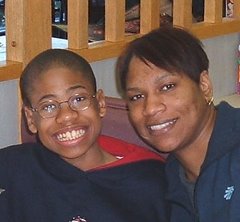
Proposed Bankruptcy Legislation Will Hurt Parents of Autistic Children
http://www.emediawire.com/releases/2005/3/emw214801.htm
New Proposed Bankrupcy Leglislation will Hurt Parents of Autistic-Mercury Poisoned Children Who are Seeking Financial Relief
Parents of "Autistic" - Mercury poisoned children suffer another severe blow at the hands of big business and heavy handed politicians in Washington, D.C.
Seattle, WA (PRWEB) March 7, 2005 -- Under pressure from banks, credit unions and credit card companies, the U.S. Congress is currently seeking to overhaul the federal bankrupcy laws that would make it much more difficult for parents of Autistic children to file for federal bankrupcy protection. This specific issue surrounds the parents of these children who have been severely hurt by their children's catastrophic medical expenses.
The U.S. Congress has been debating this new legislation for some weeks and is now preparing to hand the President this new federal bankrupcy legislation. This proposed legislation in its current form is grossly unfair to all parents who have been financially wiped out by the current "Autism" epidemic.
Parents of Autistic children, who last year discovered that their children's Autism was caused by Thimerosal ( a vaccine additive containing 49.6% mercury ) contained in their government mandated and approved baby vaccines, will receive no federal protection under the proposed new bankrupcy legislation.
This series of events has angered parents who have been hit hard by this medical catastrophy. Under this proposed legislation, parents of these sick children may loose their homes because of this legislations lack of federal protection for these injured families.
According to the book titled, Mercury: The Winged Messenger( ISBN # 1-4184-3781-6 ) as many as 350,000 children now suffer from this medical tragedy. The U.S. Governments role and the drug conglomerates role in this tragedy has been extensively documented in this book.
According to parents, this new federal bankrupcy leglislation is heavy handed, grossly unfair and will destroy the very fabric of the principles that this country was founded on.
These Autistic - Mercury poisoned children have lost their own futures. Now, the parents who have lost these children, may also loose everything else. The U.S. congress must continue to debate these issues and to protect these children and their families who have been affected by this terrible tragedy.
The legal rights of these vaccine injured children and that of their parents must be protected at all costs.
For more information and resources on autism go to: http://www.autismconcepts.com/.
Tuesday, March 08, 2005
Study: MMR Japan study versus Wakefield and Stott rebuttal w contact info urls
As some of today's and recent news articles indicate, letters from parents to journalists and to researchers seem to be helping raise public awareness. This email is posted so that individuals can have urls and titles for the MMR-in-Japan study (2) and for the rebuttal by Wakefield and Stott (1). Also herein is contact information for the Japan-MMR study's lead author.
Thanks to T. Binstock.
1. Commentary: Japanese study is the strongest evidence yet for a link between MMR and autism
Andrew J Wakefield FRCS FRCPath and Carol M Stott PhD
http://www.thoughtfulhouse.org/pr-0205.htm
Honda and colleagues present a fascinating report on the cumulative incidence (numbers of new cases with time) of autistic spectrum disorders (ASDs) in the Kohoku Ward, Yokohama, Japan, for children born 1988 to 1996. The study seeks to examine the relationship between ASD and MMR vaccination. Japan is unique since MMR was introduced in 1989 and discontinued in April 1993. Honda et. al. see this as providing an ideal opportunity to test whether there is a causal association between MMR exposure and incidence of ASDs. They predict that, if MMR causes autism, stopping MMR should result in a subsequent decline in incidence. This was not seen. In fact, there was a striking rise in the incidence of ASDs in this population over time, with a marked rise postdating the removal of MMR. The authors state that their finding 'implies that MMR could not cause a substantial proportion of cases of autism'.
In conducting a study of this kind it is important to consider the background against which earlier hypotheses relating to the possible association between measles containing vaccines such as MMR, bowel disease, and childhood developmental disorders were formulated, and according to which any relevant data should be interpreted.
The above notwithstanding, the authors of the Japanese study are confident in the completeness of ascertainment of ASD cases, the accuracy and precision of their screening, and the quality of diagnostic services for developmental disorders. Given this level of confidence in the incidence figures, the data merit further scrutiny in light of Japan's unique experience with the vaccines of interest.
[rest of Wakefield, Stott rebuttal at url: http://www.thoughtfulhouse.org/pr-0205.htm]
2. No effect of MMR withdrawal on the incidence of autism: a total population study.
Hideo Honda et al.
Journal of Child Psychology and Psychiatry doi:
10.1111/j.1469-7610.2005.01425.x
http://www.blackwell-synergy.com/links/doi/10.1111/j.1469-7610.2005.01425.x/abs/
Hideo Honda <honda@yokohama.email.ne.jp>Yokohama Rehabilitation Center,
1770 Toriyama-cho, Kohoku-ku, Yokohama 222-0035, Japan
Tel: +81-45-473-0666; Fax: +81-45-473-0956
Background: A causal relationship between the measles, mumps, and rubella (MMR) vaccine and occurrence of autism spectrum disorders (ASD) has been claimed, based on an increase in ASD in the USA and the UK after introduction of the MMR vaccine. However, the possibility that this increase is coincidental has not been eliminated. The unique circumstances of a Japanese MMR vaccination program provide an opportunity for comparison of ASD incidence before and after termination of the program.
Methods: This study examined cumulative incidence of ASD up to age seven for children born from 1988 to 1996 in Kohoku Ward (population approximately 300,000), Yokohama, Japan. ASD cases included all cases of pervasive developmental disorders according to ICD-10 guidelines.
Results: The MMR vaccination rate in the city of Yokohama declined significantly in the birth cohorts of years 1988 through 1992, and not a single vaccination was administered in 1993 or thereafter. In contrast, cumulative incidence of ASD up to age seven increased significantly in the birth cohorts of years 1988 through 1996 and most notably rose dramatically beginning with the birth cohort of 1993.
Conclusions: The significance of this finding is that MMR vaccination is most unlikely to be a main cause of ASD, that it cannot explain the rise over time in the incidence of ASD, and that withdrawal of MMR in countries where it is still being used cannot be expected to lead to a reduction in the incidence of ASD.
For more information and resources on autism and vaccines go to:
http://www.autismconcepts.com/.
Thanks to T. Binstock.
1. Commentary: Japanese study is the strongest evidence yet for a link between MMR and autism
Andrew J Wakefield FRCS FRCPath and Carol M Stott PhD
http://www.thoughtfulhouse.org/pr-0205.htm
Honda and colleagues present a fascinating report on the cumulative incidence (numbers of new cases with time) of autistic spectrum disorders (ASDs) in the Kohoku Ward, Yokohama, Japan, for children born 1988 to 1996. The study seeks to examine the relationship between ASD and MMR vaccination. Japan is unique since MMR was introduced in 1989 and discontinued in April 1993. Honda et. al. see this as providing an ideal opportunity to test whether there is a causal association between MMR exposure and incidence of ASDs. They predict that, if MMR causes autism, stopping MMR should result in a subsequent decline in incidence. This was not seen. In fact, there was a striking rise in the incidence of ASDs in this population over time, with a marked rise postdating the removal of MMR. The authors state that their finding 'implies that MMR could not cause a substantial proportion of cases of autism'.
In conducting a study of this kind it is important to consider the background against which earlier hypotheses relating to the possible association between measles containing vaccines such as MMR, bowel disease, and childhood developmental disorders were formulated, and according to which any relevant data should be interpreted.
The above notwithstanding, the authors of the Japanese study are confident in the completeness of ascertainment of ASD cases, the accuracy and precision of their screening, and the quality of diagnostic services for developmental disorders. Given this level of confidence in the incidence figures, the data merit further scrutiny in light of Japan's unique experience with the vaccines of interest.
[rest of Wakefield, Stott rebuttal at url: http://www.thoughtfulhouse.org/pr-0205.htm]
2. No effect of MMR withdrawal on the incidence of autism: a total population study.
Hideo Honda et al.
Journal of Child Psychology and Psychiatry doi:
10.1111/j.1469-7610.2005.01425.x
http://www.blackwell-synergy.com/links/doi/10.1111/j.1469-7610.2005.01425.x/abs/
Hideo Honda <honda@yokohama.email.ne.jp>Yokohama Rehabilitation Center,
1770 Toriyama-cho, Kohoku-ku, Yokohama 222-0035, Japan
Tel: +81-45-473-0666; Fax: +81-45-473-0956
Background: A causal relationship between the measles, mumps, and rubella (MMR) vaccine and occurrence of autism spectrum disorders (ASD) has been claimed, based on an increase in ASD in the USA and the UK after introduction of the MMR vaccine. However, the possibility that this increase is coincidental has not been eliminated. The unique circumstances of a Japanese MMR vaccination program provide an opportunity for comparison of ASD incidence before and after termination of the program.
Methods: This study examined cumulative incidence of ASD up to age seven for children born from 1988 to 1996 in Kohoku Ward (population approximately 300,000), Yokohama, Japan. ASD cases included all cases of pervasive developmental disorders according to ICD-10 guidelines.
Results: The MMR vaccination rate in the city of Yokohama declined significantly in the birth cohorts of years 1988 through 1992, and not a single vaccination was administered in 1993 or thereafter. In contrast, cumulative incidence of ASD up to age seven increased significantly in the birth cohorts of years 1988 through 1996 and most notably rose dramatically beginning with the birth cohort of 1993.
Conclusions: The significance of this finding is that MMR vaccination is most unlikely to be a main cause of ASD, that it cannot explain the rise over time in the incidence of ASD, and that withdrawal of MMR in countries where it is still being used cannot be expected to lead to a reduction in the incidence of ASD.
For more information and resources on autism and vaccines go to:
http://www.autismconcepts.com/.


Study: US study confirms bowel disease findings in children with autism
Study: U.S. study confirms bowel disease findings in children with autism
Neuropsychobiology. 2005 Feb 28;51(2):77-85
Dysregulated Innate Immune Responses in Young Children with Autism Spectrum Disorders: Their Relationship to Gastrointestinal Symptoms and Dietary Intervention.
Jyonouchi H, Geng L, Ruby A, Zimmerman-Bier B.
Department of Pediatrics, New Jersey Medical School, UMDNJ, Newark, N.J., USA.
Autism researchers at the University of New Jersey Medical School in the US have confirmed the original findings of researchers from the UK, by finding evidence of marked inflammatory and immune abnormalities in children with autism associated with gastrointestinal symptoms. The study compared the production of inflammatory and anti-inflammatory molecules by immune cells in autistic children on unrestricted (n = 100) or elimination (n = 77) diets with developmentally normal children with non-allergic food hypersensitivity on unrestricted (n = 14) or elimination (n = 16) diets, and healthy typically developing children. In response to challenge with bacterial toxins or dietary proteins from cow's milk, immune cells from autistic children with bowel symptoms showed a strong pro-inflammatory response and a reduced ability to switch off immune system activity compared with the other children.The authors conclude that the findings indicate intrinsic defects of these immune responses in autistic children with intestinal problems, suggesting a possible link between gastrointestinal and behavioral symptoms mediated by immune abnormalities. Dr Wakefield who led the team that first described intestinal disease in UK children with autism and demonstrated very similar immune abnormalities to those described by the New Jersey researchers in this group of patients, now heads up Thoughtful House Center for Children in Austin, Texas. Dr Wakefield confirmed the importance of these new findings and stressed their potential for increasing our understanding the role of gastrointestinal inflammation in the behavioural symptoms in children with developmental disorders such as autism. Thoughtful House in a not-for-profit organization dedicated to recovering children with developmental disorders through a unique combination of state of the art medical care, education and research.
For more information and resources on autism go to:
http://www.autismconcepts.com/.
Neuropsychobiology. 2005 Feb 28;51(2):77-85
Dysregulated Innate Immune Responses in Young Children with Autism Spectrum Disorders: Their Relationship to Gastrointestinal Symptoms and Dietary Intervention.
Jyonouchi H, Geng L, Ruby A, Zimmerman-Bier B.
Department of Pediatrics, New Jersey Medical School, UMDNJ, Newark, N.J., USA.
Autism researchers at the University of New Jersey Medical School in the US have confirmed the original findings of researchers from the UK, by finding evidence of marked inflammatory and immune abnormalities in children with autism associated with gastrointestinal symptoms. The study compared the production of inflammatory and anti-inflammatory molecules by immune cells in autistic children on unrestricted (n = 100) or elimination (n = 77) diets with developmentally normal children with non-allergic food hypersensitivity on unrestricted (n = 14) or elimination (n = 16) diets, and healthy typically developing children. In response to challenge with bacterial toxins or dietary proteins from cow's milk, immune cells from autistic children with bowel symptoms showed a strong pro-inflammatory response and a reduced ability to switch off immune system activity compared with the other children.The authors conclude that the findings indicate intrinsic defects of these immune responses in autistic children with intestinal problems, suggesting a possible link between gastrointestinal and behavioral symptoms mediated by immune abnormalities. Dr Wakefield who led the team that first described intestinal disease in UK children with autism and demonstrated very similar immune abnormalities to those described by the New Jersey researchers in this group of patients, now heads up Thoughtful House Center for Children in Austin, Texas. Dr Wakefield confirmed the importance of these new findings and stressed their potential for increasing our understanding the role of gastrointestinal inflammation in the behavioural symptoms in children with developmental disorders such as autism. Thoughtful House in a not-for-profit organization dedicated to recovering children with developmental disorders through a unique combination of state of the art medical care, education and research.
For more information and resources on autism go to:
http://www.autismconcepts.com/.
Study: Eye contact triggers threat signals in autistic childrens brains
<http://www.eurekalert.org/pubnews.php><http://www.eurekalert.org/pubnews.php><http://www.eurekalert.org/pubnews.php
Contact: Kim Dalton or Richard Davidson <mailto:kmdalton@wisc.edu> kmdalton@wisc.edu
608-263 8913
Study: Eye contact triggers threat signals in autistic children's brains
MADISON - Brain tests at the University of Wisconsin-Madison suggest thatautistic children shy from eye contact because they perceive even the mostfamiliar face as an uncomfortable threat. The work deepens understanding of an autistic brain's function and may oneday inform new treatment approaches and augment how teachers interact withtheir autistic students. Tracking the correlation between eye movements and brain activity, theresearchers found that in autistic subjects, the amygdala - an emotioncenter in the brain associated with negative feelings - lights up to anabnormal extent during a direct gaze upon a non-threatening face. Writing inthe March 6 issue of the journal Nature Neuroscience, the scientists alsoreport that because autistic children avert eye contact, the brain'sfusiform region, which is critical for face perception, is less active thanit would be during a normally developing child's stare. "This is the very first published study that assesses how individuals withautism look at faces while simultaneously monitoring which of their brainareas are active," says lead author Kim Dalton, an assistant scientist atUW-Madison's Waisman Laboratory for Brain Imaging and Behavior. Daltonmeasured eye movements in conjunction with magnetic resonance imaging (MRI),a sophisticated technology that allows researchers to "see" a brain inaction. Notably, the UW-Madison study overturns the existing notion that autisticchildren struggle to process faces because of a malfunction in the fusiformarea. Rather, in autistic children the fusiform "is fundamentally normal"and shows only stunted activity because over-aroused amygdalas make autisticchildren want to look away, says senior author Richard Davidson, aUW-Madison psychiatry and psychology professor who has earned internationalrecognition for his work on the neural underpinnings of emotion. "Imagine walking through the world and interpreting every face that looks atyou as a threat, even the face of your own mother," Davidson adds.Scientists have in the past speculated that the amygdala - which has beenimplicated in certain anxiety and mood disorders - plays a role in autism,but the study directly supports that idea for the first time. An increasingly publicized developmental disability, autism greatly weakensthe capacity to socialize and communicate normally. The tendency to avoideye contact is one of the most pervasive traits among autistic children,says Dalton. The characteristic is a problem because eyes, in particular,are a crucial source of "subtle cues that are critical for normal social andemotional development," Dalton says. Dalton's work comprised two studies. In the first, researchers placedautistic children inside an MRI scanner and showed them pictures of faceswith both emotional and neutral expressions. The children had to press oneof two buttons to indicate whether a face showed a blank or expressive face.Throughout the process, the researchers used precise eye-tracking technologyto measure exactly which parts of the face study participants were lookingat and for how long. Normally developing children far outpaced the autisticstudy participants in identifying expressions correctly. During the second study, the researchers again placed subjects in MRImachines and showed them photographs of both familiar and unfamiliar faces.They monitored eye movements and brain activity, and once again, autisticsubjects performed considerably more poorly than normally developingparticipants. In the future, the findings could help scientists "train autistic childrento look at a person's eye region in a more strategic way, like when theperson may not be looking directly at them," says Davidson. Researcherseventually could assess whether such approaches improve the ability to makeeye contact and whether they might even induce positive developmentalchanges in the brain. Because autism is more inheritable than any other psychiatric condition,researchers also could start to explore the genetic mechanisms underlyinghyperactive amygdalas - "a completely uncharted research territory," saysDavidson. And if the autistic amygdala is found to be overactive frominfancy, the knowledge could help doctors implement intervention approachesright from an early age. ###
- Paroma Basu (608) 262-9772, <mailto:basu1@wisc.edu> basu1@wisc.edu
Contact: Kim Dalton or Richard Davidson <mailto:kmdalton@wisc.edu> kmdalton@wisc.edu
608-263 8913
Study: Eye contact triggers threat signals in autistic children's brains
MADISON - Brain tests at the University of Wisconsin-Madison suggest thatautistic children shy from eye contact because they perceive even the mostfamiliar face as an uncomfortable threat. The work deepens understanding of an autistic brain's function and may oneday inform new treatment approaches and augment how teachers interact withtheir autistic students. Tracking the correlation between eye movements and brain activity, theresearchers found that in autistic subjects, the amygdala - an emotioncenter in the brain associated with negative feelings - lights up to anabnormal extent during a direct gaze upon a non-threatening face. Writing inthe March 6 issue of the journal Nature Neuroscience, the scientists alsoreport that because autistic children avert eye contact, the brain'sfusiform region, which is critical for face perception, is less active thanit would be during a normally developing child's stare. "This is the very first published study that assesses how individuals withautism look at faces while simultaneously monitoring which of their brainareas are active," says lead author Kim Dalton, an assistant scientist atUW-Madison's Waisman Laboratory for Brain Imaging and Behavior. Daltonmeasured eye movements in conjunction with magnetic resonance imaging (MRI),a sophisticated technology that allows researchers to "see" a brain inaction. Notably, the UW-Madison study overturns the existing notion that autisticchildren struggle to process faces because of a malfunction in the fusiformarea. Rather, in autistic children the fusiform "is fundamentally normal"and shows only stunted activity because over-aroused amygdalas make autisticchildren want to look away, says senior author Richard Davidson, aUW-Madison psychiatry and psychology professor who has earned internationalrecognition for his work on the neural underpinnings of emotion. "Imagine walking through the world and interpreting every face that looks atyou as a threat, even the face of your own mother," Davidson adds.Scientists have in the past speculated that the amygdala - which has beenimplicated in certain anxiety and mood disorders - plays a role in autism,but the study directly supports that idea for the first time. An increasingly publicized developmental disability, autism greatly weakensthe capacity to socialize and communicate normally. The tendency to avoideye contact is one of the most pervasive traits among autistic children,says Dalton. The characteristic is a problem because eyes, in particular,are a crucial source of "subtle cues that are critical for normal social andemotional development," Dalton says. Dalton's work comprised two studies. In the first, researchers placedautistic children inside an MRI scanner and showed them pictures of faceswith both emotional and neutral expressions. The children had to press oneof two buttons to indicate whether a face showed a blank or expressive face.Throughout the process, the researchers used precise eye-tracking technologyto measure exactly which parts of the face study participants were lookingat and for how long. Normally developing children far outpaced the autisticstudy participants in identifying expressions correctly. During the second study, the researchers again placed subjects in MRImachines and showed them photographs of both familiar and unfamiliar faces.They monitored eye movements and brain activity, and once again, autisticsubjects performed considerably more poorly than normally developingparticipants. In the future, the findings could help scientists "train autistic childrento look at a person's eye region in a more strategic way, like when theperson may not be looking directly at them," says Davidson. Researcherseventually could assess whether such approaches improve the ability to makeeye contact and whether they might even induce positive developmentalchanges in the brain. Because autism is more inheritable than any other psychiatric condition,researchers also could start to explore the genetic mechanisms underlyinghyperactive amygdalas - "a completely uncharted research territory," saysDavidson. And if the autistic amygdala is found to be overactive frominfancy, the knowledge could help doctors implement intervention approachesright from an early age. ###
- Paroma Basu (608) 262-9772, <mailto:basu1@wisc.edu> basu1@wisc.edu
U.S. Autism Rates Rise Sharply
U.S. Autism Rates Rise Sharply
By Karen Pallarito
MONDAY, March 7 (HealthDay News) -- The apparent rise in the proportion of children in the United States with autism appears to be real, a new analysis suggests.
Autism prevalence is increasing with successively younger children, particularly those born between 1987 and 1992, epidemiologists report in the March issue of Pediatrics.
Read full article at:
http://www.forbes.com/lifestyle/health/feeds/hscout/2005/03/07/hscout524376.html
See also:
Report to the Legislature on the Principal Findings from The Epidemiology of Autism in California: A Comprehensive Pilot Study
The U.C. Mind Institute autism prevalance in CA report available at url: http://www.ucdmc.ucdavis.edu/mindinstitute/html/news/autismreport.htm
For more information and resources on autism go to:
http://www.autismconcepts.com/.
By Karen Pallarito
MONDAY, March 7 (HealthDay News) -- The apparent rise in the proportion of children in the United States with autism appears to be real, a new analysis suggests.
Autism prevalence is increasing with successively younger children, particularly those born between 1987 and 1992, epidemiologists report in the March issue of Pediatrics.
Read full article at:
http://www.forbes.com/lifestyle/health/feeds/hscout/2005/03/07/hscout524376.html
See also:
Report to the Legislature on the Principal Findings from The Epidemiology of Autism in California: A Comprehensive Pilot Study
The U.C. Mind Institute autism prevalance in CA report available at url: http://www.ucdmc.ucdavis.edu/mindinstitute/html/news/autismreport.htm
For more information and resources on autism go to:
http://www.autismconcepts.com/.
Sunday, March 06, 2005
CDC Finally Takes Action on Dangers of Common Childhood Vaccines
CDC Finally Takes Action on Dangers of Common Childhood Vaccines
Mountain Views
By John Hanchette
http://www.niagarafallsreporter.com/hanchette150.html
The federal government frequently takes a licking in these pages, but late in February it finally made one small decisive step toward helping the children of America. The decision, from the Centers for Disease Control and Prevention, drew little attention in the mainstream media, but it deserves praise nonetheless. It also deserves a followup warning that the action will be useless without more tough decision-making in favor of openness and access to vaccination records. The CDC -- under the promising direction of Dr. Julie L. Gerberding -- at long last decided to separate the national immunization program from the branch that monitors vaccine safety and the risks of serious side effects.
here's a link to another related article,
CDC Sets New Safety Goals for Childhood Vaccines
Health and Health Care in Schools
http://www.healthinschools.org/ejournal/2005/march1.htm
The Centers for Disease Control and Prevention (CDC) announced February 18 that it will separate a program that advocates vaccination from another program that is supposed to monitor the safety of existing vaccines. In announcing the reorganization, CDC Director Dr. Julie Gerberding said the move will improve the credibility and capability of the safety branch, which will be headed by CDC’s science chief, Dr. Dixie Snider, Jr.
For more information and resources on autism and vaccines go to:
http://www.autismconcepts.com/.
Mountain Views
By John Hanchette
http://www.niagarafallsreporter.com/hanchette150.html
The federal government frequently takes a licking in these pages, but late in February it finally made one small decisive step toward helping the children of America. The decision, from the Centers for Disease Control and Prevention, drew little attention in the mainstream media, but it deserves praise nonetheless. It also deserves a followup warning that the action will be useless without more tough decision-making in favor of openness and access to vaccination records. The CDC -- under the promising direction of Dr. Julie L. Gerberding -- at long last decided to separate the national immunization program from the branch that monitors vaccine safety and the risks of serious side effects.
here's a link to another related article,
CDC Sets New Safety Goals for Childhood Vaccines
Health and Health Care in Schools
http://www.healthinschools.org/ejournal/2005/march1.htm
The Centers for Disease Control and Prevention (CDC) announced February 18 that it will separate a program that advocates vaccination from another program that is supposed to monitor the safety of existing vaccines. In announcing the reorganization, CDC Director Dr. Julie Gerberding said the move will improve the credibility and capability of the safety branch, which will be headed by CDC’s science chief, Dr. Dixie Snider, Jr.
For more information and resources on autism and vaccines go to:
http://www.autismconcepts.com/.
Subscribe to:
Posts (Atom)