LAFAYETTE
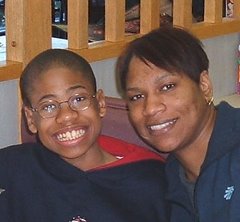
A child's return from autism
Couple eager to share their conviction that mercury poisoning was the culprit
Leslie Fulbright, Chronicle Staff Writer
Wednesday, May 25, 2005
A Lafayette couple, certain that chelation therapy has helped their autistic son, stepped squarely into the controversy surrounding the causes of autism and its treatment Tuesday as they joined 150 other parents in launching an international support group that will aggressively promote the treatment.
Jamie Handley was a happy, healthy baby who reached all his developmental milestones until he turned 18 months, his parents said. Then, he started spinning in circles and standing on his toes and no longer responded to his name. They were eventually told he was autistic -- one of an increasing number of children over the last decade to be diagnosed with the disorder, which severely impairs a child's ability to interact with others.
Full article available at:
http://sfgate.com/cgi-bin/article.cgi?f=/c/a/2005/05/25/BAGU0CU2K71.DTL
For more information and resources on autism, go to: http://www.autismconcepts.com/.
Tuesday, May 31, 2005
Oily fish hope in fight against child autism
Oily fish hope in fight against child autism
EATING more oily fish could help manage autism in children, according to a study involving Edinburgh's Sick Kids Hospital.
A possible link between fatty acid deficiency and childhood autism has been discovered by scientists at the universities of Edinburgh and Stirling.
Article available at: http://news.scotsman.com/health.cfm?id=592302005
For more information and resources on autism, go to: http://www.autismconcepts.com/.
EATING more oily fish could help manage autism in children, according to a study involving Edinburgh's Sick Kids Hospital.
A possible link between fatty acid deficiency and childhood autism has been discovered by scientists at the universities of Edinburgh and Stirling.
Article available at: http://news.scotsman.com/health.cfm?id=592302005
For more information and resources on autism, go to: http://www.autismconcepts.com/.


The Age of Autism: Mercury and the Amish
By Dan Olmsted
Published 5/20/2005
WASHINGTON, May 20 (UPI) -- The cases of autism among the Amish that I've identified over the past several weeks appear to have at least one link -- a link made of mercury.
That's not something I expected to encounter. I had been looking for an unvaccinated population to test the controversial idea that vaccines, and in particular the mercury-based preservative called thimerosal, could be behind the apparent rise in autism cases over the past decade.
The concept: If the Amish have little or no autism, it might point a finger at something to which they have not been exposed.
Most of the medical establishment, it must be stated upfront, considers the idea that thimerosal could have played a role in the rise of autism disproven and dangerous. As noted in the last column, however, the director of the Centers for Disease Control and Prevention says she has "an open mind" about that possibility.
So do I, having come across correlations that made me want to look more closely at thimerosal. For instance, the first child diagnosed with autism in the United States was born in 1931, the same year thimerosal was first used in a vaccine. And autism diagnoses exploded in the 1990s, the same decade children got an increasing number of thimerosal-containing vaccines (it was phased out starting in 1999). Tantalizing, but proof of nothing.
So I turned to the 22,000 Amish in Lancaster County, Pa. I didn't expect to find many, if any, vaccinated Amish: they have a religious exemption from the otherwise mandatory U.S. vaccination schedule. When German measles broke out among Amish in Pennsylvania in 1991, the CDC reported that just one of 51 pregnant women they studied had ever been vaccinated against it.
To cut to the chase, what I've found to date is very little evidence of autism among the Amish in Lancaster County, far below the 1 in 166 rate of Autism Spectrum Disorders the CDC cites for children born in the United States today. I don't discount the idea that they might be more difficult to find or diagnose, and I'm still looking.
I did find three or possibly four children with autism and, weirdly, a possible link to vaccinations. One was a child adopted from China, where she got all her vaccinations before being vaccinated all over again when she got to the states. Her Amish-Mennonite mother said she believes that vaccine load caused her autism. The mother told me about another child who had what she described as an immediate vaccine reaction that left her autistic at age 15 months.
That mother said a minority of younger Amish have begun getting their children vaccinated, though a local doctor who has treated thousands of Amish said the rate is still less than 1 percent.
The pattern I was noticing then took an interesting twist. From a doctor's posting on an alternative health Web site, I learned about several cases of autism among Amish children who had not, in fact, been vaccinated.
I called that doctor, Lawrence Leichtman, at his office in Virginia Beach, Va. A pediatrician and geneticist who has been widely published in medical journals, he told me he was treating six unvaccinated Amish children and adolescents -- three from Pennsylvania, including one from Lancaster County; two from Ohio, and one from Texas.
That seemed to render any relationship between autism and mercury exposure in the Amish less likely. But, not after what Leichtman said next.
"By the way," he volunteered, "four of these six kids all have elevated mercury. The only two that don't, one of them is from Texas and one is from Iowa. But all of the people in Pennsylvania and one of the people in Iowa have elevated mercury."
Given what I had already come across in Lancaster County, I wanted to hear more about that. Were the mercury levels significantly higher? I asked. "Oh yes," he responded.
What did he think was going on?
"The people in Pennsylvania, I've actually tracked back on them," Leichtman said. "There's definitely a plume from one of the coal-fired power plants that just goes right over them. And the one in Iowa, it's a little less obvious because actually he's in the Amana Colonies, but I have seen reports of the area around Amana having elevated levels of mercury in the environment."
As it happens, the Pittsburgh Post reported last week that Pennsylvania has four of the nation's 10 "dirtiest power plants." Mercury is a byproduct of coal combustion.
Leichtman also believes that northern states "get most of the prevailing wind that comes across the Pacific. You get that trans-Pacific flow which is all Chinese mercury. We're getting a load of Chinese mercury, as far as I can tell."
Leichtman's comments meant that the two people I talked to, who knew anything about autism among the Amish, independently brought up mercury exposure -- in vaccines and in the environment-- as the cause of most of the cases.
That's a link others have made, although not to the Amish, whose autism prevalence has apparently never been studied:
- "We believe that thimerosal and environmental mercury -- which are worldwide pollutants -- are behind the surge" in autism in the 1990s, wrote Sallie Bernard in 2002. She is a founder of the group Safe Minds, which wants mercury out of all medical products. Bernard co-authored a controversial 1999 study about thimerosal, "Autism: A novel form of mercury poisoning."
- "In the end it is mercury in the brain that causes such problems, and that mercury can come from several sources," said Boyd Haley, chairman of the chemistry department at the University of Kentucky and another maverick on thimerosal.
"Therefore, a logical approach is to think that all mercury exposures are additive, even if some may be more causative than others."
Haley cited a recent Texas study, first reported by United Press International in March, that found an association between autism rates and exposure to industrial mercury emissions in Texas counties. One county with high autism but low exposure to mercury emissions turned out on closer inspection to be the site of a huge abandoned mercury mine, the researchers found.
Leichtman believes the damage to children is being done by environmental mercury, not the mercury in vaccines (my own research makes me think that if it's either, it's both). He said he can detect elevated mercury levels in about half his 500 autism patients.
"Environmental mercury is horrible," he said, "and I think that's where it's coming from. To me, people with autism are the canaries in the coal mine. A lot of them are reflecting the damage from all of that."
Leichtman, like a number of other doctors, is trying to flush mercury out of autistic children through a process called chelation (key-LAY-shun).
Chelation as a treatment for autism is unproven and controversial (what about autism is not unproven and controversial?), and it carries a risk of serious side effects. Chelation has been used for 40 years in cases of heavy metal toxicity, including lead poisoning.
But does it help children with autism?
"The people in Pennsylvania wouldn't take chelation," Leichtman said, and noted the Amish aversion to medical procedures and drugs. "One in Iowa did. He certainly did better."
We'll look at chelation and its implications in the next column.
-0-
e-mail: dolmsted@upi.com
Copyright © 2001-2005 United Press International
Article at:
http://www.upi.com/view.cfm?StoryID=20050518-065621-1970r
Below are links to earlier articles in Dan Olmsted series. http://www.washtimes.com/upi-breaking/20050321-115921-9566r.htmhttp://washingtontimes.com/upi-breaking/20050417-052541-5549r.htmhttp://www.washtimes.com/upi-breaking/20050420-042247-8776r.htmhttp://www.washtimes.com/upi-breaking/20050420-042117-2803r.htmhttp://www.washtimes.com/upi-breaking/20050126-113404-1472r.htmhttp://www.washtimes.com/upi-breaking/20050203-030807-6482r.htmhttp://www.washtimes.com/upi-breaking/20050222-010118-1074r.htmhttp://www.washtimes.com/upi-breaking/20050302-120651-3833r.htmhttp://www.washtimes.com/upi-breaking/20050228-053300-1821r.htmhttp://www.washtimes.com/upi-breaking/20050314-052518-7615r.htmhttp://www.washtimes.com/upi-breaking/20050508-082911-5005r.htmhttp://www.washtimes.com/upi-breaking/20050508-112601-3643r.htmhttp://www.washtimes.com/upi-breaking/20050317-021624-9394r.htm
For more information and resources on autism, go to: http://www.autismconcepts.com/.
Published 5/20/2005
WASHINGTON, May 20 (UPI) -- The cases of autism among the Amish that I've identified over the past several weeks appear to have at least one link -- a link made of mercury.
That's not something I expected to encounter. I had been looking for an unvaccinated population to test the controversial idea that vaccines, and in particular the mercury-based preservative called thimerosal, could be behind the apparent rise in autism cases over the past decade.
The concept: If the Amish have little or no autism, it might point a finger at something to which they have not been exposed.
Most of the medical establishment, it must be stated upfront, considers the idea that thimerosal could have played a role in the rise of autism disproven and dangerous. As noted in the last column, however, the director of the Centers for Disease Control and Prevention says she has "an open mind" about that possibility.
So do I, having come across correlations that made me want to look more closely at thimerosal. For instance, the first child diagnosed with autism in the United States was born in 1931, the same year thimerosal was first used in a vaccine. And autism diagnoses exploded in the 1990s, the same decade children got an increasing number of thimerosal-containing vaccines (it was phased out starting in 1999). Tantalizing, but proof of nothing.
So I turned to the 22,000 Amish in Lancaster County, Pa. I didn't expect to find many, if any, vaccinated Amish: they have a religious exemption from the otherwise mandatory U.S. vaccination schedule. When German measles broke out among Amish in Pennsylvania in 1991, the CDC reported that just one of 51 pregnant women they studied had ever been vaccinated against it.
To cut to the chase, what I've found to date is very little evidence of autism among the Amish in Lancaster County, far below the 1 in 166 rate of Autism Spectrum Disorders the CDC cites for children born in the United States today. I don't discount the idea that they might be more difficult to find or diagnose, and I'm still looking.
I did find three or possibly four children with autism and, weirdly, a possible link to vaccinations. One was a child adopted from China, where she got all her vaccinations before being vaccinated all over again when she got to the states. Her Amish-Mennonite mother said she believes that vaccine load caused her autism. The mother told me about another child who had what she described as an immediate vaccine reaction that left her autistic at age 15 months.
That mother said a minority of younger Amish have begun getting their children vaccinated, though a local doctor who has treated thousands of Amish said the rate is still less than 1 percent.
The pattern I was noticing then took an interesting twist. From a doctor's posting on an alternative health Web site, I learned about several cases of autism among Amish children who had not, in fact, been vaccinated.
I called that doctor, Lawrence Leichtman, at his office in Virginia Beach, Va. A pediatrician and geneticist who has been widely published in medical journals, he told me he was treating six unvaccinated Amish children and adolescents -- three from Pennsylvania, including one from Lancaster County; two from Ohio, and one from Texas.
That seemed to render any relationship between autism and mercury exposure in the Amish less likely. But, not after what Leichtman said next.
"By the way," he volunteered, "four of these six kids all have elevated mercury. The only two that don't, one of them is from Texas and one is from Iowa. But all of the people in Pennsylvania and one of the people in Iowa have elevated mercury."
Given what I had already come across in Lancaster County, I wanted to hear more about that. Were the mercury levels significantly higher? I asked. "Oh yes," he responded.
What did he think was going on?
"The people in Pennsylvania, I've actually tracked back on them," Leichtman said. "There's definitely a plume from one of the coal-fired power plants that just goes right over them. And the one in Iowa, it's a little less obvious because actually he's in the Amana Colonies, but I have seen reports of the area around Amana having elevated levels of mercury in the environment."
As it happens, the Pittsburgh Post reported last week that Pennsylvania has four of the nation's 10 "dirtiest power plants." Mercury is a byproduct of coal combustion.
Leichtman also believes that northern states "get most of the prevailing wind that comes across the Pacific. You get that trans-Pacific flow which is all Chinese mercury. We're getting a load of Chinese mercury, as far as I can tell."
Leichtman's comments meant that the two people I talked to, who knew anything about autism among the Amish, independently brought up mercury exposure -- in vaccines and in the environment-- as the cause of most of the cases.
That's a link others have made, although not to the Amish, whose autism prevalence has apparently never been studied:
- "We believe that thimerosal and environmental mercury -- which are worldwide pollutants -- are behind the surge" in autism in the 1990s, wrote Sallie Bernard in 2002. She is a founder of the group Safe Minds, which wants mercury out of all medical products. Bernard co-authored a controversial 1999 study about thimerosal, "Autism: A novel form of mercury poisoning."
- "In the end it is mercury in the brain that causes such problems, and that mercury can come from several sources," said Boyd Haley, chairman of the chemistry department at the University of Kentucky and another maverick on thimerosal.
"Therefore, a logical approach is to think that all mercury exposures are additive, even if some may be more causative than others."
Haley cited a recent Texas study, first reported by United Press International in March, that found an association between autism rates and exposure to industrial mercury emissions in Texas counties. One county with high autism but low exposure to mercury emissions turned out on closer inspection to be the site of a huge abandoned mercury mine, the researchers found.
Leichtman believes the damage to children is being done by environmental mercury, not the mercury in vaccines (my own research makes me think that if it's either, it's both). He said he can detect elevated mercury levels in about half his 500 autism patients.
"Environmental mercury is horrible," he said, "and I think that's where it's coming from. To me, people with autism are the canaries in the coal mine. A lot of them are reflecting the damage from all of that."
Leichtman, like a number of other doctors, is trying to flush mercury out of autistic children through a process called chelation (key-LAY-shun).
Chelation as a treatment for autism is unproven and controversial (what about autism is not unproven and controversial?), and it carries a risk of serious side effects. Chelation has been used for 40 years in cases of heavy metal toxicity, including lead poisoning.
But does it help children with autism?
"The people in Pennsylvania wouldn't take chelation," Leichtman said, and noted the Amish aversion to medical procedures and drugs. "One in Iowa did. He certainly did better."
We'll look at chelation and its implications in the next column.
-0-
e-mail: dolmsted@upi.com
Copyright © 2001-2005 United Press International
Article at:
http://www.upi.com/view.cfm?StoryID=20050518-065621-1970r
Below are links to earlier articles in Dan Olmsted series. http://www.washtimes.com/upi-breaking/20050321-115921-9566r.htmhttp://washingtontimes.com/upi-breaking/20050417-052541-5549r.htmhttp://www.washtimes.com/upi-breaking/20050420-042247-8776r.htmhttp://www.washtimes.com/upi-breaking/20050420-042117-2803r.htmhttp://www.washtimes.com/upi-breaking/20050126-113404-1472r.htmhttp://www.washtimes.com/upi-breaking/20050203-030807-6482r.htmhttp://www.washtimes.com/upi-breaking/20050222-010118-1074r.htmhttp://www.washtimes.com/upi-breaking/20050302-120651-3833r.htmhttp://www.washtimes.com/upi-breaking/20050228-053300-1821r.htmhttp://www.washtimes.com/upi-breaking/20050314-052518-7615r.htmhttp://www.washtimes.com/upi-breaking/20050508-082911-5005r.htmhttp://www.washtimes.com/upi-breaking/20050508-112601-3643r.htmhttp://www.washtimes.com/upi-breaking/20050317-021624-9394r.htm
For more information and resources on autism, go to: http://www.autismconcepts.com/.
2004/2005 U.S. Dept. of Education Autism Figures as of October 2005
The official State statistics are produced by the U.S. Department of Education, providing the number of disabled students ages 6-21 served by IDEA (Individuals With Disabilities Education Act) who have autism.
The data is in table format and compares the increase of students with autism over a period of 12 years (1992-93 and 2003-04).
U.S. DOE data available at:
http://www.ideadata.org/tables27th/ar_aa3.htm
For more information and resources on autism, go to: http://www.autismconcepts.com/.
The data is in table format and compares the increase of students with autism over a period of 12 years (1992-93 and 2003-04).
U.S. DOE data available at:
http://www.ideadata.org/tables27th/ar_aa3.htm
For more information and resources on autism, go to: http://www.autismconcepts.com/.
Tuesday, May 24, 2005
Foundation for Autism Information and Research - FAIR Media Center
FAIR Media Center offers free educational up-to-date autism information and latest advances in research available in video format featuring researchers, i.e. Mark R. Geier, MD, PhD. and medical practitioners, Dr. Andrew Wakefield, Dr. Rashid Buttar, Dr. Bernard Rimland and many others.
Learn more at your leisure about vaccines and autism, the immune system and autism, metal detoxification, treating gastrointestinal problems, nutritional interventions, preventing autism, and much more.
Videos are downloadable in both high/low connection speeds available at:
http://www.autismmedia.org/media1.html
For more information and resources on autism, go to:
http://www.autismconcepts.com/.
Learn more at your leisure about vaccines and autism, the immune system and autism, metal detoxification, treating gastrointestinal problems, nutritional interventions, preventing autism, and much more.
Videos are downloadable in both high/low connection speeds available at:
http://www.autismmedia.org/media1.html
For more information and resources on autism, go to:
http://www.autismconcepts.com/.
The Age of Autism Mercury ascending
By Dan Olmsted
UPI published 5/17/05
Washington, DC, May. 17 (UPI) -- A year ago, the prestigious Institute of Medicine slammed the door on the idea that mercury in vaccines bore any relation to autism.
"The overwhelming evidence from several well-designed studies indicates that childhood vaccines are not associated with autism," the chairman of the IOM panel, Harvard scientist Marie McCormick, told reporters last May 18.
The panel went further: It took the unusual step of urging that research money go instead to more "promising" areas. You can't slam a door much harder than that.
But 12 months later, that door seems slightly ajar. One big doorstop is the new 441-page book by David Kirby called "Evidence of Harm," a compelling portrayal of parents and scientists who have pushed the vaccines-autism theory. They contend that a mercury-based preservative called thimerosal, in an increasing number of vaccinations, triggered an autism epidemic in the 1990s.
Thimerosal was phased out of U.S. childhood vaccines beginning in 1999.
One memorable vignette in Kirby's book is a meeting between several of those advocates and Dr. Julie Gerberding, who had been director of the Centers for Disease Control and Prevention less than two years.
Last May 12, a week before the IOM report, Gerberding flew in from Atlanta to meet them -- at her request -- in the Rayburn House Office Building on Capitol Hill. Rep. Dave Weldon, R-Fla., a medical doctor who is a persistent critic of thimerosal and the CDC's handling of the issue, also was present.
Taking turns, the parents and scientists methodically laid out their case.
Mady Hornig of Columbia University described how mice with an autoimmune genetic predisposition develop autistic-like behaviors after being injected with thimerosal-containing vaccines.
"Hornig played the videos for Gerberding, who suddenly appeared stunned," Kirby recounts in his book. "She brought her hands to her face in disbelief.
"Dave Weldon had a similar reaction. He stopped Hornig in the middle of her ghastly presentation. 'Wait a minute,' he said. 'Am I to understand you correctly? You injected these mice with the same amount of mercury, relatively speaking, that infants receive in vaccines, and you saw these kinds of mutilatory behaviors? You saw this mouse eat through the cranium of his cellmate?'
"'Yes,' she replied calmly."
The Institute of Medicine saw the same presentation before issuing its report but rejected it as unconvincing.
Gerberding was polite but noncommital, Kirby writes. As she left, she said, "I am not afraid of controversy, and I am determined to follow the science."
Call it coincidence, but it's striking how much less dismissive of thimerosal concerns the CDC is these days, compared with the Institute of Medicine and others.
The National Network for Immunization Information, for instance, launched a pre-emptive broadside against "Evidence of Harm." That group represents the mainstream medical establishment, including the American Academy of Pediatrics, the American Nurses Association and the American Academy of Family Physicians. Their members, it should be noted, were among those who administered the vaccines in question on the recommendation of the CDC.
"Warning: Controversial vaccine book," the NNII statement was headlined. "Reporter David Kirby has recently written a book ... purporting that there is a link between thimerosal and autism and other developmental disorders."
That's a bit of an overstatement, considering the first two sentences of Kirby's book: "Does mercury in vaccines cause autism in children? Anyone hoping to find proof that it does in the pages that follow is advised to put this book down now."
The NNII asserted that "extensive evidence shows no link between vaccines and neurodevelopmental disorders, including autism. This evidence is based on well-established scientific studies.
"Continued attempts to link vaccines and autism run the risk of diverting attention away from efforts to understand the cause or causes of autism," the group said.
The CDC also issued a release on Kirby's book. Its thrust was different -- that the book is a "look back" to a time when thimerosal was in childhood vaccines.
"Given the historical nature of the book, it is important to emphasize that today, with the exception of some flu vaccines, none of the vaccines used in the U.S. to protect preschool children against 12 infectious diseases contain thimerosal as a preservative.
"As the IOM concluded in a recent report, the vast majority of studies, which have involved hundreds of thousands of children in a number of countries, have failed to find any association between exposure to thimerosal in vaccines and autism; that is, they have failed to find any evidence of harm," the CDC said.
It's worth noting the contrasts in the statement. The doctors and nurses group says "extensive evidence shows no link." Dr. McCormick at the Institute of Medicine says "overwhelming evidence" shows no link.
But the CDC, which unlike such groups has ongoing access to the actual data, merely states that studies so far "have failed to find any association."
"CDC continues to support research related to autism," the statement said, "including studies designed to examine the possible causal association between autism and other possible environmental causes, including thimerosal-containing vaccines. ... Research in these areas is ongoing."
Ongoing research that includes thimerosal as a possible cause of autism? Supported by the CDC?
Put simply, the CDC isn't ruling out anything -- contrary to the Institute of Medicine's declaration that more research on thimerosal is a waste of money, contrary to the medical establishment's pronouncement that continuing to look could cause harm.
Consider Gerberding's comments April 28, 2004, at a House subcommittee hearing: "We don't have the evidence to show that the thimerosal preservative is a risk, but you know we have an open mind about that."
Apparently the Institute of Medicine's findings three weeks later didn't completely reassure her, because this February -- almost a year after the IOM report -- she said the same thing in an interview with NBC.
"Right now, the scientific evidence doesn't provide any framework for concluding that thimerosal or immunizations in any way affect autism," she said. "But we have to have an open mind about that."
An open mind, not a closed door. Ongoing research, not ending research. That's quite a difference. Experts who are certain thimerosal didn't cause the autism epidemic may want to have a word with Dr. Gerberding.
Next: Mercury, the Amish and the autism epidemic.
--
E-mail: dolmsted@upi.com
http://www.washtimes.com/upi-breaking/20050516-125109-7345r.htm
Below are links to earlier articles in Dan Olmsted series.
http://www.washtimes.com/upi-breaking/20050321-115921-9566r.htmhttp://washingtontimes.com/upi-breaking/20050417-052541-5549r.htmhttp://www.washtimes.com/upi-breaking/20050420-042247-8776r.htmhttp://www.washtimes.com/upi-breaking/20050420-042117-2803r.htmhttp://www.washtimes.com/upi-breaking/20050126-113404-1472r.htmhttp://www.washtimes.com/upi-breaking/20050203-030807-6482r.htmhttp://www.washtimes.com/upi-breaking/20050222-010118-1074r.htmhttp://www.washtimes.com/upi-breaking/20050302-120651-3833r.htmhttp://www.washtimes.com/upi-breaking/20050228-053300-1821r.htmhttp://www.washtimes.com/upi-breaking/20050314-052518-7615r.htmhttp://www.washtimes.com/upi-breaking/20050508-082911-5005r.htmhttp://www.washtimes.com/upi-breaking/20050508-112601-3643r.htmhttp://www.washtimes.com/upi-breaking/20050317-021624-9394r.htm
For more information and resources on autism, go to:
http://www.autismconcepts.com/.
UPI published 5/17/05
Washington, DC, May. 17 (UPI) -- A year ago, the prestigious Institute of Medicine slammed the door on the idea that mercury in vaccines bore any relation to autism.
"The overwhelming evidence from several well-designed studies indicates that childhood vaccines are not associated with autism," the chairman of the IOM panel, Harvard scientist Marie McCormick, told reporters last May 18.
The panel went further: It took the unusual step of urging that research money go instead to more "promising" areas. You can't slam a door much harder than that.
But 12 months later, that door seems slightly ajar. One big doorstop is the new 441-page book by David Kirby called "Evidence of Harm," a compelling portrayal of parents and scientists who have pushed the vaccines-autism theory. They contend that a mercury-based preservative called thimerosal, in an increasing number of vaccinations, triggered an autism epidemic in the 1990s.
Thimerosal was phased out of U.S. childhood vaccines beginning in 1999.
One memorable vignette in Kirby's book is a meeting between several of those advocates and Dr. Julie Gerberding, who had been director of the Centers for Disease Control and Prevention less than two years.
Last May 12, a week before the IOM report, Gerberding flew in from Atlanta to meet them -- at her request -- in the Rayburn House Office Building on Capitol Hill. Rep. Dave Weldon, R-Fla., a medical doctor who is a persistent critic of thimerosal and the CDC's handling of the issue, also was present.
Taking turns, the parents and scientists methodically laid out their case.
Mady Hornig of Columbia University described how mice with an autoimmune genetic predisposition develop autistic-like behaviors after being injected with thimerosal-containing vaccines.
"Hornig played the videos for Gerberding, who suddenly appeared stunned," Kirby recounts in his book. "She brought her hands to her face in disbelief.
"Dave Weldon had a similar reaction. He stopped Hornig in the middle of her ghastly presentation. 'Wait a minute,' he said. 'Am I to understand you correctly? You injected these mice with the same amount of mercury, relatively speaking, that infants receive in vaccines, and you saw these kinds of mutilatory behaviors? You saw this mouse eat through the cranium of his cellmate?'
"'Yes,' she replied calmly."
The Institute of Medicine saw the same presentation before issuing its report but rejected it as unconvincing.
Gerberding was polite but noncommital, Kirby writes. As she left, she said, "I am not afraid of controversy, and I am determined to follow the science."
Call it coincidence, but it's striking how much less dismissive of thimerosal concerns the CDC is these days, compared with the Institute of Medicine and others.
The National Network for Immunization Information, for instance, launched a pre-emptive broadside against "Evidence of Harm." That group represents the mainstream medical establishment, including the American Academy of Pediatrics, the American Nurses Association and the American Academy of Family Physicians. Their members, it should be noted, were among those who administered the vaccines in question on the recommendation of the CDC.
"Warning: Controversial vaccine book," the NNII statement was headlined. "Reporter David Kirby has recently written a book ... purporting that there is a link between thimerosal and autism and other developmental disorders."
That's a bit of an overstatement, considering the first two sentences of Kirby's book: "Does mercury in vaccines cause autism in children? Anyone hoping to find proof that it does in the pages that follow is advised to put this book down now."
The NNII asserted that "extensive evidence shows no link between vaccines and neurodevelopmental disorders, including autism. This evidence is based on well-established scientific studies.
"Continued attempts to link vaccines and autism run the risk of diverting attention away from efforts to understand the cause or causes of autism," the group said.
The CDC also issued a release on Kirby's book. Its thrust was different -- that the book is a "look back" to a time when thimerosal was in childhood vaccines.
"Given the historical nature of the book, it is important to emphasize that today, with the exception of some flu vaccines, none of the vaccines used in the U.S. to protect preschool children against 12 infectious diseases contain thimerosal as a preservative.
"As the IOM concluded in a recent report, the vast majority of studies, which have involved hundreds of thousands of children in a number of countries, have failed to find any association between exposure to thimerosal in vaccines and autism; that is, they have failed to find any evidence of harm," the CDC said.
It's worth noting the contrasts in the statement. The doctors and nurses group says "extensive evidence shows no link." Dr. McCormick at the Institute of Medicine says "overwhelming evidence" shows no link.
But the CDC, which unlike such groups has ongoing access to the actual data, merely states that studies so far "have failed to find any association."
"CDC continues to support research related to autism," the statement said, "including studies designed to examine the possible causal association between autism and other possible environmental causes, including thimerosal-containing vaccines. ... Research in these areas is ongoing."
Ongoing research that includes thimerosal as a possible cause of autism? Supported by the CDC?
Put simply, the CDC isn't ruling out anything -- contrary to the Institute of Medicine's declaration that more research on thimerosal is a waste of money, contrary to the medical establishment's pronouncement that continuing to look could cause harm.
Consider Gerberding's comments April 28, 2004, at a House subcommittee hearing: "We don't have the evidence to show that the thimerosal preservative is a risk, but you know we have an open mind about that."
Apparently the Institute of Medicine's findings three weeks later didn't completely reassure her, because this February -- almost a year after the IOM report -- she said the same thing in an interview with NBC.
"Right now, the scientific evidence doesn't provide any framework for concluding that thimerosal or immunizations in any way affect autism," she said. "But we have to have an open mind about that."
An open mind, not a closed door. Ongoing research, not ending research. That's quite a difference. Experts who are certain thimerosal didn't cause the autism epidemic may want to have a word with Dr. Gerberding.
Next: Mercury, the Amish and the autism epidemic.
--
E-mail: dolmsted@upi.com
http://www.washtimes.com/upi-breaking/20050516-125109-7345r.htm
Below are links to earlier articles in Dan Olmsted series.
http://www.washtimes.com/upi-breaking/20050321-115921-9566r.htmhttp://washingtontimes.com/upi-breaking/20050417-052541-5549r.htmhttp://www.washtimes.com/upi-breaking/20050420-042247-8776r.htmhttp://www.washtimes.com/upi-breaking/20050420-042117-2803r.htmhttp://www.washtimes.com/upi-breaking/20050126-113404-1472r.htmhttp://www.washtimes.com/upi-breaking/20050203-030807-6482r.htmhttp://www.washtimes.com/upi-breaking/20050222-010118-1074r.htmhttp://www.washtimes.com/upi-breaking/20050302-120651-3833r.htmhttp://www.washtimes.com/upi-breaking/20050228-053300-1821r.htmhttp://www.washtimes.com/upi-breaking/20050314-052518-7615r.htmhttp://www.washtimes.com/upi-breaking/20050508-082911-5005r.htmhttp://www.washtimes.com/upi-breaking/20050508-112601-3643r.htmhttp://www.washtimes.com/upi-breaking/20050317-021624-9394r.htm
For more information and resources on autism, go to:
http://www.autismconcepts.com/.
Subscribe to:
Posts (Atom)