Updated: 2:41 PM Mar 6, 2006
Zac Schultz
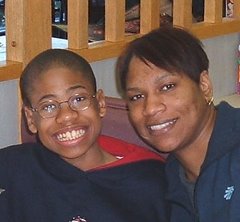
Dr. Steven Gutstein agrees, "The assumption was you couldn't treat the autism itself, so you had to learn to live with it and give you whatever abilities you could have given the fact your brain was developing in this way."
Dr. Gutstein doesn't accept that answer anymore, so he created the Relationship Development Intervention program. "We're saying we believe it's possible to change the way the brain is developing so that we're not just treating people with autism, we're treating the autism itself."
Dr. Gutstein says people with autism don't develop the ability to solve problems or develop relationships–and that's why they rarely learn to live independently or develop lasting friendships.
The RDI system is pretty basic. "We slow things down, we amplify things so they can start to become more effective in teaching their child how to think about the world, how to make decisions, how to solve problems," says Dr. Gutstein.
Excerpt from article at: http://nbc15.madison.com/news/headlines/2407501.html
For information, resources and practical strategies please visit: www.AutismConcepts.com.
Monday, March 06, 2006
Friday, March 03, 2006
Voucher Plan Not Right, Public School Advocates Say
By Deirdre Fernandes, The Virginian-Pilot
A major battle is brewing over legislation that aims to give parentsof children with disabilities money to attend private schools.
Fearing that the measure would be the first step toward vouchers that would siphon resources from public school divisions, educators from across the state have sent e-mails and made phone calls to their lawmakers, and railed against the proposal in public meetings.
Read full article at: http://home.hamptonroads.com/stories/story.cfm?story=100445&ran=98303
For information, resources and practical strategies please visit: www.AutismConcepts.com.
A major battle is brewing over legislation that aims to give parentsof children with disabilities money to attend private schools.
Fearing that the measure would be the first step toward vouchers that would siphon resources from public school divisions, educators from across the state have sent e-mails and made phone calls to their lawmakers, and railed against the proposal in public meetings.
Read full article at: http://home.hamptonroads.com/stories/story.cfm?story=100445&ran=98303
For information, resources and practical strategies please visit: www.AutismConcepts.com.


The Age of Autism: Less is beautiful
By Dan Olmsted
UPI Senior Editor
Whatever the reason, a big decline in autism diagnoses would be welcome news to anyone who cares about the nightmarish prevalence of the disorder.
The latest signal that something may be going on comes from the father-and-son research team of Dr. Mark R. Geier and David A. Geier. They report in the spring issue of the Journal of American Physicians and Surgeons that "significant decreasing trends in newly diagnosed NDs (neurodevelopmental disorders) were observed ... from mid-2002 through 2005" in two separate databases.
The first is kept by the California Department of Developmental Services and is widely regarded as the most accurate barometer of full-syndrome, professionally diagnosed cases of autism. Those qualifiers are important because autism spectrum disorders run the gamut from severe (full-syndrome) to milder (Asperger's disorder) to hard to define (the awfully named PDD-NOS, or pervasive developmental disorders, not otherwise specified).
So focusing on the full-syndrome cases -- the most easily identified and indisputable -- is a smart way to go.
The other database is the Vaccine Adverse Events Reporting System maintained by the federal government, to which health professionals, parents and anyone else can report what they believe are side effects of vaccines.
That's much less consistent and credible, of course, but the Geiers see the VAERS information as an informal confirmation of the California data --companion graphs printed side by side in the study show remarkably similar rise-and-falls in autism.
"The consistency of the effects observed for the spectrum of NDs, including autism and speech disorders, and the agreement between the observations from two separate databases, support the conclusion that the effect is real and not a chance observation. The magnitude of the change in the trend lines is substantial," the Geiers write.
The Geiers also cite another confirmation: "(P)rovisional data from the U.S. Department of Education show a recent decrease of 529 in the number of new autism diagnoses recorded among children 3 to 5 years old, after years of annual increases. There were 1,451 new cases in 2001-2002; 1,981 in 2002-2003; 3,707 in 2003-2004; and 3,178 in 2004-2005."
The Geiers attribute the rise and fall to the increasing use of the mercury preservative thimerosal in childhood vaccines in the 1990s, followed by the phase-out beginning in 1999. While federal health authorities and mainstream medical groups say concern about thimerosal is not founded on good science, the Geiers think the trends ought to prompt a fresh look at the theory.
The people I talk to who think the preservative may indeed have triggered the rise in autism don't know what to make of all these numbers. While the autism rate may be falling as indicated in these databases, they say it's far too soon to make conclusive claims.
Some, in fact, have told me they think it should be falling further, faster if thimerosal is really behind the autism epidemic. Others suspect the connection is already there to see in exactly those numbers.
Then there's the possible confounding effect of flu shots for children and pregnant women, most of which still contain thimerosal. A number of other vaccines retain "trace" amounts of thimerosal.
And despite the welcome trends in data cited by the Geier, some countervailing reports are troubling. For example, reporter Steven Carter wrote in The Oregonian just last week that "(c)hildren diagnosed with autism, a brain disorder that disrupts a child's communication and social skills, jumped from 5,070 in 2004 to 5,637 in December. Over five years, the number of autistic students rose by 67 percent."
I'm sure someone can reconcile that with figures suggesting autism is on its way down, but I can't.
"We wish we knew exactly what is going on," said an admirably tentative Dr. Bob Nickel, a developmental pediatrician who heads the Autism Training Network at Oregon Health & Science University. He told Carter environmental issues could be at work.
Certainly other neurotoxins -- mercury in fish, just to pick an example often cited -- could harm kids' development whether the mercury in vaccines was ever a problem or not. It doesn't take much imagination to connect fish from the Pacific with mercury-laced plumes wafting over from China with a long history of mercury mines in the northwest -- and voila, rising autism in Oregon.
That's rank speculation. But some areas of the country probably do create more autism than others -- "hotspots," as they're called.
All this should make people cautious, humble and, as the scientists always remind us, evidence-based.
Mark Blaxill, a director of the mercury-out-of-medicine group Safe Minds, told me a couple of years ago: "By the time kids born in 2001 turn 5, we'll have a pretty good picture of the thimerosal effect."
That's soon -- but not quite yet.
--
E-mail: consumer@upi.com
© Copyright 2006 United Press International, Inc. All Rights Reserved
For information, resources and practical strategies on autism visit: www.AutismConcepts.com.
UPI Senior Editor
Whatever the reason, a big decline in autism diagnoses would be welcome news to anyone who cares about the nightmarish prevalence of the disorder.
The latest signal that something may be going on comes from the father-and-son research team of Dr. Mark R. Geier and David A. Geier. They report in the spring issue of the Journal of American Physicians and Surgeons that "significant decreasing trends in newly diagnosed NDs (neurodevelopmental disorders) were observed ... from mid-2002 through 2005" in two separate databases.
The first is kept by the California Department of Developmental Services and is widely regarded as the most accurate barometer of full-syndrome, professionally diagnosed cases of autism. Those qualifiers are important because autism spectrum disorders run the gamut from severe (full-syndrome) to milder (Asperger's disorder) to hard to define (the awfully named PDD-NOS, or pervasive developmental disorders, not otherwise specified).
So focusing on the full-syndrome cases -- the most easily identified and indisputable -- is a smart way to go.
The other database is the Vaccine Adverse Events Reporting System maintained by the federal government, to which health professionals, parents and anyone else can report what they believe are side effects of vaccines.
That's much less consistent and credible, of course, but the Geiers see the VAERS information as an informal confirmation of the California data --companion graphs printed side by side in the study show remarkably similar rise-and-falls in autism.
"The consistency of the effects observed for the spectrum of NDs, including autism and speech disorders, and the agreement between the observations from two separate databases, support the conclusion that the effect is real and not a chance observation. The magnitude of the change in the trend lines is substantial," the Geiers write.
The Geiers also cite another confirmation: "(P)rovisional data from the U.S. Department of Education show a recent decrease of 529 in the number of new autism diagnoses recorded among children 3 to 5 years old, after years of annual increases. There were 1,451 new cases in 2001-2002; 1,981 in 2002-2003; 3,707 in 2003-2004; and 3,178 in 2004-2005."
The Geiers attribute the rise and fall to the increasing use of the mercury preservative thimerosal in childhood vaccines in the 1990s, followed by the phase-out beginning in 1999. While federal health authorities and mainstream medical groups say concern about thimerosal is not founded on good science, the Geiers think the trends ought to prompt a fresh look at the theory.
The people I talk to who think the preservative may indeed have triggered the rise in autism don't know what to make of all these numbers. While the autism rate may be falling as indicated in these databases, they say it's far too soon to make conclusive claims.
Some, in fact, have told me they think it should be falling further, faster if thimerosal is really behind the autism epidemic. Others suspect the connection is already there to see in exactly those numbers.
Then there's the possible confounding effect of flu shots for children and pregnant women, most of which still contain thimerosal. A number of other vaccines retain "trace" amounts of thimerosal.
And despite the welcome trends in data cited by the Geier, some countervailing reports are troubling. For example, reporter Steven Carter wrote in The Oregonian just last week that "(c)hildren diagnosed with autism, a brain disorder that disrupts a child's communication and social skills, jumped from 5,070 in 2004 to 5,637 in December. Over five years, the number of autistic students rose by 67 percent."
I'm sure someone can reconcile that with figures suggesting autism is on its way down, but I can't.
"We wish we knew exactly what is going on," said an admirably tentative Dr. Bob Nickel, a developmental pediatrician who heads the Autism Training Network at Oregon Health & Science University. He told Carter environmental issues could be at work.
Certainly other neurotoxins -- mercury in fish, just to pick an example often cited -- could harm kids' development whether the mercury in vaccines was ever a problem or not. It doesn't take much imagination to connect fish from the Pacific with mercury-laced plumes wafting over from China with a long history of mercury mines in the northwest -- and voila, rising autism in Oregon.
That's rank speculation. But some areas of the country probably do create more autism than others -- "hotspots," as they're called.
All this should make people cautious, humble and, as the scientists always remind us, evidence-based.
Mark Blaxill, a director of the mercury-out-of-medicine group Safe Minds, told me a couple of years ago: "By the time kids born in 2001 turn 5, we'll have a pretty good picture of the thimerosal effect."
That's soon -- but not quite yet.
--
E-mail: consumer@upi.com
© Copyright 2006 United Press International, Inc. All Rights Reserved
For information, resources and practical strategies on autism visit: www.AutismConcepts.com.
Thursday, March 02, 2006
Study links autism, vaccine
By Jon Brodkin
Thursday, March 2, 2006
Between 1988 and 1992, the federal government more than doubled the amount of mercury injected into babies by recommending additional vaccines that contain thimerosal, a preservative containing mercury.
Since then, estimated autism prevalence soared from one out of 2,500 births to one in every 166. Federal officials say the increase is at least partly explained by changes in diagnostic guidelines, but some researchers believe mercury in vaccines is to blame.
Thimerosal is still used in flu shots, but was eliminated from most other childhood vaccines by 2003.
A father-son research team determined that new diagnoses of autism and other neurodevelopmental disorders have dropped since then after analyzing data from the national Vaccine Adverse Event Reporting System, the U.S. Department of Education and the California Department of Developmental Services.
Excerpt from article at: http://www.dailynewstribune.com/localRegional/view.bg?articleid=70814
For information, resources and practical strategies visit: www.AutismConcepts.com
Thursday, March 2, 2006
Between 1988 and 1992, the federal government more than doubled the amount of mercury injected into babies by recommending additional vaccines that contain thimerosal, a preservative containing mercury.
Since then, estimated autism prevalence soared from one out of 2,500 births to one in every 166. Federal officials say the increase is at least partly explained by changes in diagnostic guidelines, but some researchers believe mercury in vaccines is to blame.
Thimerosal is still used in flu shots, but was eliminated from most other childhood vaccines by 2003.
A father-son research team determined that new diagnoses of autism and other neurodevelopmental disorders have dropped since then after analyzing data from the national Vaccine Adverse Event Reporting System, the U.S. Department of Education and the California Department of Developmental Services.
Excerpt from article at: http://www.dailynewstribune.com/localRegional/view.bg?articleid=70814
For information, resources and practical strategies visit: www.AutismConcepts.com
Wednesday, March 01, 2006
Time for CDC to Come Clean
from National Autism Association
http://www.huffingtonpost.com/robert-f-kennedy-jr/time-for-cdc-to-come-clea_b_16550.html
Time for CDC to Come Clean
by Robert F. Kennedy Jr.
03.01.2006
Correspondence newly obtained under the Freedom of Information Act raises troubling new questions about CDC's role in the Thimerosal scandal. Thimerosal is the mercury-based vaccine preservative that has been linked to epidemics of neurological disorders, including autism, in American children born after 1989.
Responding to scientific studies linking dangerous levels of mercury to a range of health disorders, the CDC in July 1999 recommended that the nation's vaccine makers eliminate Thimerosal as a preservative, "as soon as possible."
But the newly released documents show that behind the scenes CDC was quietly discouraging Thimerosal's removal. In a July 1999 letter, vaccine producer SmithKline Beecham tells CDC that it is ready to produce non-Thimerosal DTP (Diptheria/Tetanus/Pertussis) vaccines immediately and has sufficient inventories to supply the entire U.S. market during the remainder of 1999 and the first half of 2000, by which time other vaccine manufacturers would have their Thimerosal-free DTP vaccines on line.
Thimerosal-laden DTP vaccines containing 25 micrograms of mercury apiece were then being administered to American infants at two months, four months and six months -- far exceeding EPA's recommended safe level for mercury. Had CDC accepted SmithKline's offer, it could have immediately reduced the mercury exposures to vaccinated six-month-old children by 40%.
However, in November, CDC mysteriously sent a letter back rejecting SmithKline's offer. Then, on July 14, 2000 CDC published a deceptive press release promising to require that all vaccines be Thimerosal-free as soon as "adequate supplies are available." This was a full 12 months after the agency had denied SmithKline's proposal.
"If CDC were basing its decision on safety alone, it would have taken SmithKline up on its offer. That's a no-brainer," said a federal health official who requested anonymity. "So there were other considerations beside safety that were guiding their decision making."
Among these "other considerations" were CDC's important concerns for the preservation of the vaccine program, a bureaucratic impulse for self-preservation, and protecting the economic interests of its vaccine industry friends."
Immediate withdrawal would send a strong message; 'We messed up!'" the health official told me. "And I don't think they wanted to send that message to parents, the public or those considering legal action."
"There was also concern," says the federal official, "that an immediate withdrawal might discredit the international vaccine programs for which CDC is an important partner." The World Health Organization has urged CDC against the banning of Thimerosal in U.S. vaccines since that prohibition might discredit WHO's third world inoculation programs. WHO, with U.S. funding, is now injecting children in developing countries with the same amounts of Thimerosal we were giving American kids at their highest exposures, but in a shorter time period. In May 2001, WHO committed to "develop a strong advocacy campaign to support the ongoing use of Thimerosal."
But CDC insiders argue that CDC's primary concern was the economic impacts on its pharmaceutical industry partners. "The big consideration was cost," says the federal health official. "A lot of CDC's friends in the vaccine industry had stockpiled Thimerosal-based vaccines. If they couldn't sell them the costs would total in the tens of millions of dollars."
On July 14, 2000 CDC promised to complete the transition to Thimerosal-free vaccines for children by first quarter 2001. But, probably for the reasons stated above, its commitment sometimes seems half-hearted.
CDC continues to promote the use of Thimerosal in vaccines. The agency continues to send its top spokesman Roger Bernier around the country to testify before state legislatures to derail state efforts to ban Thimerosal in vaccines. Last week Bernier was testifying against a proposed Thimerosal ban in Maryland.CDC continues to exert muscular efforts to derail studies of American cohorts -- the Amish, Christian Scientists, and home-schooled children -- who were not exposed to Thimerosal vaccines. Preliminary studies of these groups indicate very low levels of the neurological disorders, including autism, that have been associated with Thimerosal in vaccinated populations.
Think Autism. Think Cure.
http://www.huffingtonpost.com/robert-f-kennedy-jr/time-for-cdc-to-come-clea_b_16550.html
Time for CDC to Come Clean
by Robert F. Kennedy Jr.
03.01.2006
Correspondence newly obtained under the Freedom of Information Act raises troubling new questions about CDC's role in the Thimerosal scandal. Thimerosal is the mercury-based vaccine preservative that has been linked to epidemics of neurological disorders, including autism, in American children born after 1989.
Responding to scientific studies linking dangerous levels of mercury to a range of health disorders, the CDC in July 1999 recommended that the nation's vaccine makers eliminate Thimerosal as a preservative, "as soon as possible."
But the newly released documents show that behind the scenes CDC was quietly discouraging Thimerosal's removal. In a July 1999 letter, vaccine producer SmithKline Beecham tells CDC that it is ready to produce non-Thimerosal DTP (Diptheria/Tetanus/Pertussis) vaccines immediately and has sufficient inventories to supply the entire U.S. market during the remainder of 1999 and the first half of 2000, by which time other vaccine manufacturers would have their Thimerosal-free DTP vaccines on line.
Thimerosal-laden DTP vaccines containing 25 micrograms of mercury apiece were then being administered to American infants at two months, four months and six months -- far exceeding EPA's recommended safe level for mercury. Had CDC accepted SmithKline's offer, it could have immediately reduced the mercury exposures to vaccinated six-month-old children by 40%.
However, in November, CDC mysteriously sent a letter back rejecting SmithKline's offer. Then, on July 14, 2000 CDC published a deceptive press release promising to require that all vaccines be Thimerosal-free as soon as "adequate supplies are available." This was a full 12 months after the agency had denied SmithKline's proposal.
"If CDC were basing its decision on safety alone, it would have taken SmithKline up on its offer. That's a no-brainer," said a federal health official who requested anonymity. "So there were other considerations beside safety that were guiding their decision making."
Among these "other considerations" were CDC's important concerns for the preservation of the vaccine program, a bureaucratic impulse for self-preservation, and protecting the economic interests of its vaccine industry friends."
Immediate withdrawal would send a strong message; 'We messed up!'" the health official told me. "And I don't think they wanted to send that message to parents, the public or those considering legal action."
"There was also concern," says the federal official, "that an immediate withdrawal might discredit the international vaccine programs for which CDC is an important partner." The World Health Organization has urged CDC against the banning of Thimerosal in U.S. vaccines since that prohibition might discredit WHO's third world inoculation programs. WHO, with U.S. funding, is now injecting children in developing countries with the same amounts of Thimerosal we were giving American kids at their highest exposures, but in a shorter time period. In May 2001, WHO committed to "develop a strong advocacy campaign to support the ongoing use of Thimerosal."
But CDC insiders argue that CDC's primary concern was the economic impacts on its pharmaceutical industry partners. "The big consideration was cost," says the federal health official. "A lot of CDC's friends in the vaccine industry had stockpiled Thimerosal-based vaccines. If they couldn't sell them the costs would total in the tens of millions of dollars."
On July 14, 2000 CDC promised to complete the transition to Thimerosal-free vaccines for children by first quarter 2001. But, probably for the reasons stated above, its commitment sometimes seems half-hearted.
CDC continues to promote the use of Thimerosal in vaccines. The agency continues to send its top spokesman Roger Bernier around the country to testify before state legislatures to derail state efforts to ban Thimerosal in vaccines. Last week Bernier was testifying against a proposed Thimerosal ban in Maryland.CDC continues to exert muscular efforts to derail studies of American cohorts -- the Amish, Christian Scientists, and home-schooled children -- who were not exposed to Thimerosal vaccines. Preliminary studies of these groups indicate very low levels of the neurological disorders, including autism, that have been associated with Thimerosal in vaccinated populations.
It's time for the CDC to come clean with the American public. Its tactics of deception and obfuscation are jeopardizing the credibility of the entire vaccine program, and therefore posing an enormous danger to public health.
Think Autism. Think Cure.
For information, resources and practical strategies visit: www.AutismConcepts.com.
Tuesday, February 28, 2006
Autism Tsunami Carries Away Parents' Resources
Society also faces high and growing costs
By James Ottar Grundvig
Special to The Epoch Times
Most parents at the onset of bringing their autistic child to a DAN (Defeat Autism Now!) doctor are unaware of the expense that lies ahead. The sheer outlay of money often accumulates faster than thimerosal in the tissues of spectrum kids. The costs go well beyond the visits to one or more doctors, who have developed varying protocols to treat different spokes of the autism wheel.
The commitment to treat an ASD child cannot be measured in weeks or months, but years and even decades. At a cost of $10,000 to $30,000 or more a year after taxes, with little or no insurance reimbursement, and our local, state, and federal governments giving a deaf ear, the money squeeze is on. There are myriad tests, from blood and yeast tests to stomach X-rays and brain MRI's, that balloon costs upfront. That's because doctors need to rule out a variety of ailments that either fall on the spectrum or outside it. When gastrointestinal (GI) problems, aka "leaky gut" or inflamed bowel disease, are added to the mix the expense and the course for treatment soar exponentially.
No longer are parents of leaky gut children merely treating the brain and detoxing the body of heavy metals, they are also trying to balance diets to curb a relentless diarrhea and constipation and get their aging kids out of wearing diapers. Leaky gut issues also have another hidden long-term drawback: Cost. When it comes to chelation therapy, my son, who doesn't have GI issues, takes the oral and stronger form of chelation. But the DMPS chelation pill ravages the stomach of children with leaky gut, who have yeast, bacteria and absorption problems, which in turn causes inflammation.
The majority of ASD kids who are receiving chelation therapy are forced to take it as a transdermal cream application, using the skin as opposed to the stomach as the conduit to receive the medicine. This slower acting chelator costs more than the pill and takes three to five years to work, due to the gradual absorption rate. The pill form takes approximately half that time and is given in cycles of every two weeks as opposed to every day or two. Thus the costs of chelating autistic children with gut issues are far more exorbitant and time-consuming than those who do not suffer GI ailments.
Excerpted from article available at: http://www.theepochtimes.com/news/6-2-27/38658.html
For information, resources and practical strategies related to autism visit www.AutismConcepts.com.
By James Ottar Grundvig
Special to The Epoch Times
Most parents at the onset of bringing their autistic child to a DAN (Defeat Autism Now!) doctor are unaware of the expense that lies ahead. The sheer outlay of money often accumulates faster than thimerosal in the tissues of spectrum kids. The costs go well beyond the visits to one or more doctors, who have developed varying protocols to treat different spokes of the autism wheel.
The commitment to treat an ASD child cannot be measured in weeks or months, but years and even decades. At a cost of $10,000 to $30,000 or more a year after taxes, with little or no insurance reimbursement, and our local, state, and federal governments giving a deaf ear, the money squeeze is on. There are myriad tests, from blood and yeast tests to stomach X-rays and brain MRI's, that balloon costs upfront. That's because doctors need to rule out a variety of ailments that either fall on the spectrum or outside it. When gastrointestinal (GI) problems, aka "leaky gut" or inflamed bowel disease, are added to the mix the expense and the course for treatment soar exponentially.
No longer are parents of leaky gut children merely treating the brain and detoxing the body of heavy metals, they are also trying to balance diets to curb a relentless diarrhea and constipation and get their aging kids out of wearing diapers. Leaky gut issues also have another hidden long-term drawback: Cost. When it comes to chelation therapy, my son, who doesn't have GI issues, takes the oral and stronger form of chelation. But the DMPS chelation pill ravages the stomach of children with leaky gut, who have yeast, bacteria and absorption problems, which in turn causes inflammation.
The majority of ASD kids who are receiving chelation therapy are forced to take it as a transdermal cream application, using the skin as opposed to the stomach as the conduit to receive the medicine. This slower acting chelator costs more than the pill and takes three to five years to work, due to the gradual absorption rate. The pill form takes approximately half that time and is given in cycles of every two weeks as opposed to every day or two. Thus the costs of chelating autistic children with gut issues are far more exorbitant and time-consuming than those who do not suffer GI ailments.
Excerpted from article available at: http://www.theepochtimes.com/news/6-2-27/38658.html
For information, resources and practical strategies related to autism visit www.AutismConcepts.com.
Subscribe to:
Posts (Atom)